
EV Industry

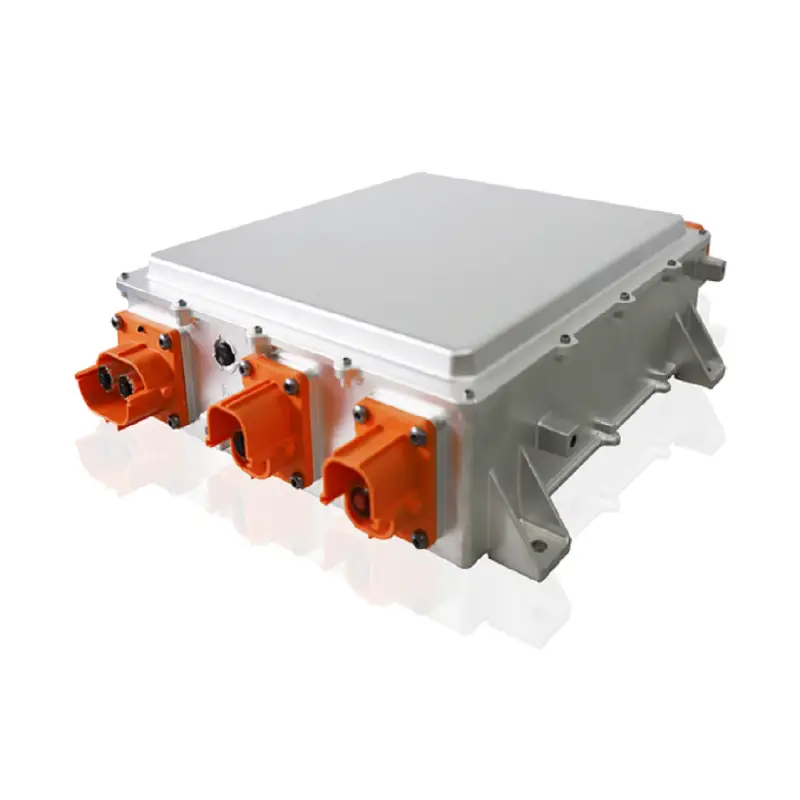
3-in-1 on-board charger (OBC) + DCDC+ PDU onboard charger
EV Industry

Everything You Need to Know About The On Board Charger for Electric Vehicles

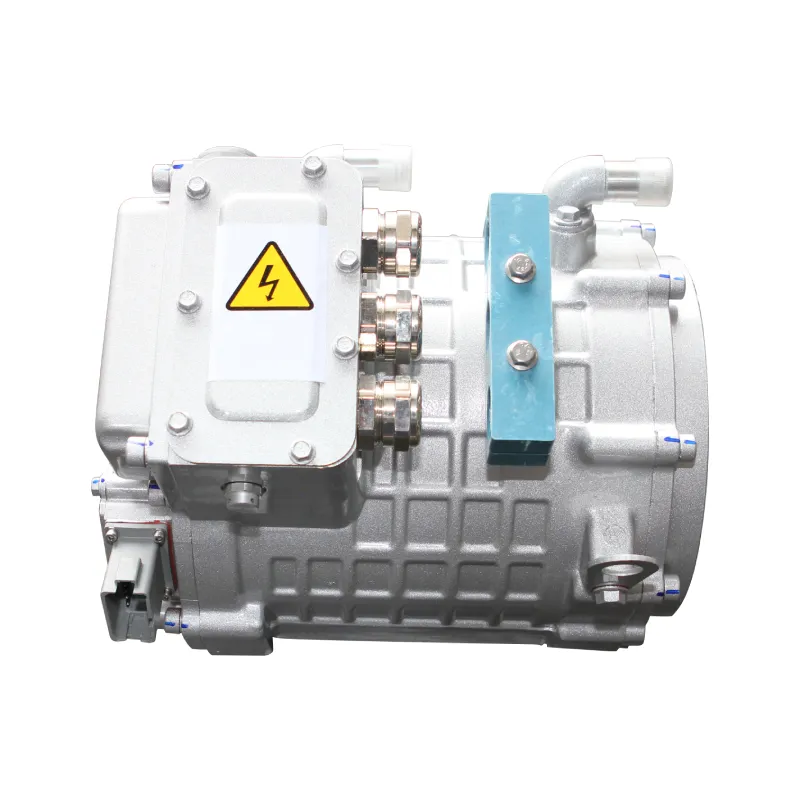
Everything You Need to Know About The On Board Charger for Electric Vehicles (EV) What is an on-board charger? An On Board Charger (OBC) is a device that converts AC power into DC power. It transforms the AC voltage from charging stations into the DC voltage required by the battery. OBCs are installed in electric vehicles (EVs) and plug-in hybrid electric vehicles (PHEVs). They enable these vehicles to be charged using AC power from residential or public charging stations. The output power of an OBC typically ranges from 3.3 kW to 22 kW. A significant advantage of OBCs is their ability to charge electric vehicles using standard household outlets. What are the different methods of charging an electric vehicle? Electric vehicle charging stations can be broadly categorized into two types: AC charging stations and DC charging stations. AC Charging Stations As the name suggests, AC charging stations provide alternating current (AC) from the electrical grid to electric vehicles. The onboard charger then converts the AC to direct current (DC) to charge the vehicle’s battery. These stations, also known as Level 1 and Level 2 chargers, are used in residential and commercial applications. The advantage of AC charging stations is that the OBC can adjust the voltage and current according to the vehicle’s needs. This eliminates the need for the charging station to communicate with the electric vehicle. However, the disadvantage is their low output power. It results in longer charging times. AC power from the grid is delivered directly to the OBC via an Electric Vehicle Supply Equipment (EVSE), which then converts it to DC and charges the battery via the Battery Management System (BMS). DC Charging Stations DC chargers take AC power from the grid and convert it to DC, bypassing the OBC to charge the battery pack directly. These chargers typically deliver high voltages up to 600V and currents up to 400A. Unlike AC chargers, which take 8-16 hours to charge a vehicle, DC charging stations can fully charge an electric vehicle in approximately 30 minutes. These stations are also known as Level 3 chargers, with the chargers referred to as DC Fast Chargers (DCFC) or Superchargers. The main advantage of DC chargers is their fast charging time. However, they are technically complex and need to communicate with the electric vehicle to charge it efficiently and safely. As shown in the typical DC charging system diagram, the EVSE bypasses the OBC and delivers DC power directly to the battery pack. The standard capacity of a DC charging station ranges from 50 kW to 300 kW. It’s more than 6 times the capacity of a single-phase on-board charger. However, AC charging through the OBC has less impact on the battery and minimizes battery aging. What are the functions of the onboard charger? The primary function of the OBC is to manage the charging process from the power grid to the vehicle’s battery. The OBC is designed to charge the battery as quickly as possible while minimizing battery degradation. It offers two charging methods: constant current charging and constant voltage charging. Constant current charging: this method charges the battery faster, but cannot fully charge the vehicle. Constant voltage charging: also known as trickle charging, this method charges the battery more slowly but with greater control, allowing the vehicle to reach a full charge. To optimize charging speed, the OBC uses constant current charging at the beginning of the charge cycle and switches to constant voltage charging toward the end. The OBC also plays a critical role in the bi-directional charging mode available in some vehicles. This capability allows it to convert DC power from the high-voltage battery pack back to AC power, supporting AC loads (Vehicle to Load, V2L), grid power (Vehicle to Grid, V2G), and even home power (Vehicle to Home, V2H). Hardware architecture of the OBC The OBC primarily consists of the following hardware components: Input Voltage Measurement Circuit: Measures the input voltage to control the conversion circuit. Input Filter: Suppresses internal noise or noise from external devices. Full-Wave Rectification Circuit: Converts AC voltage to DC voltage. Power Factor Correction (PFC) Circuit: Improves power efficiency degraded by waveform phase shifts. Voltage Conversion Circuit: Converts voltage using components such as an isolation transformer and field-effect transistor (FET) switches. Output Filter: Suppresses noise generated internally. Output Voltage Measurement Circuit: Measures the output voltage to control the conversion circuit. Control Circuit: Manages the conversion circuit and other components. DC/DC Converter: Provides power to the control circuit. Communication Interface: Facilitates communication with external devices. What are the trends and challenges in OBC development? The OBC is a critical component for both battery electric vehicles (BEVs) and plug-in hybrid electric vehicles (PHEVs). As the number of electric vehicles increases, the number of vehicles equipped with OBCs will also increase. At the same time, more electric vehicles will be equipped with DC fast charging capabilities.Key trends and challenges in OBC development include: Adaptation to 800V High-Voltage Platforms: OBCs will be compatible with these high-voltage systems. Increased Output Power: As 800V platforms become more common and battery capacities grow, OBCs will need to provide higher output power. Future OBCs will need to feature high voltage (high withstand voltage), high current, low loss, high heat resistance, and compact size. Bidirectional Charging Capability: OBCs will need to support bidirectional charging, allowing the conversion of DC power from high-voltage battery packs into AC power to support external AC loads. Use of Discrete High-Voltage Components: These components will be widely used in OBCs to enhance performance. Increased Power Requirements: The trend towards fast charging will significantly increase the power requirements of OBC topologies. Our On Board Charger Systems Engineered for top-tier power conversion efficiency and remarkable power density, our chargers cover a broad power spectrum, ranging from 3.3 kW to 40 kW. Whether you’re driving a passenger car, bus, van, or LCV, or require upfit power supply for specialized vehicles, our comprehensive solutions ensure seamless integration and optimal performance.  Applicable for both PHEV and BEV Wide input range, 1-phase

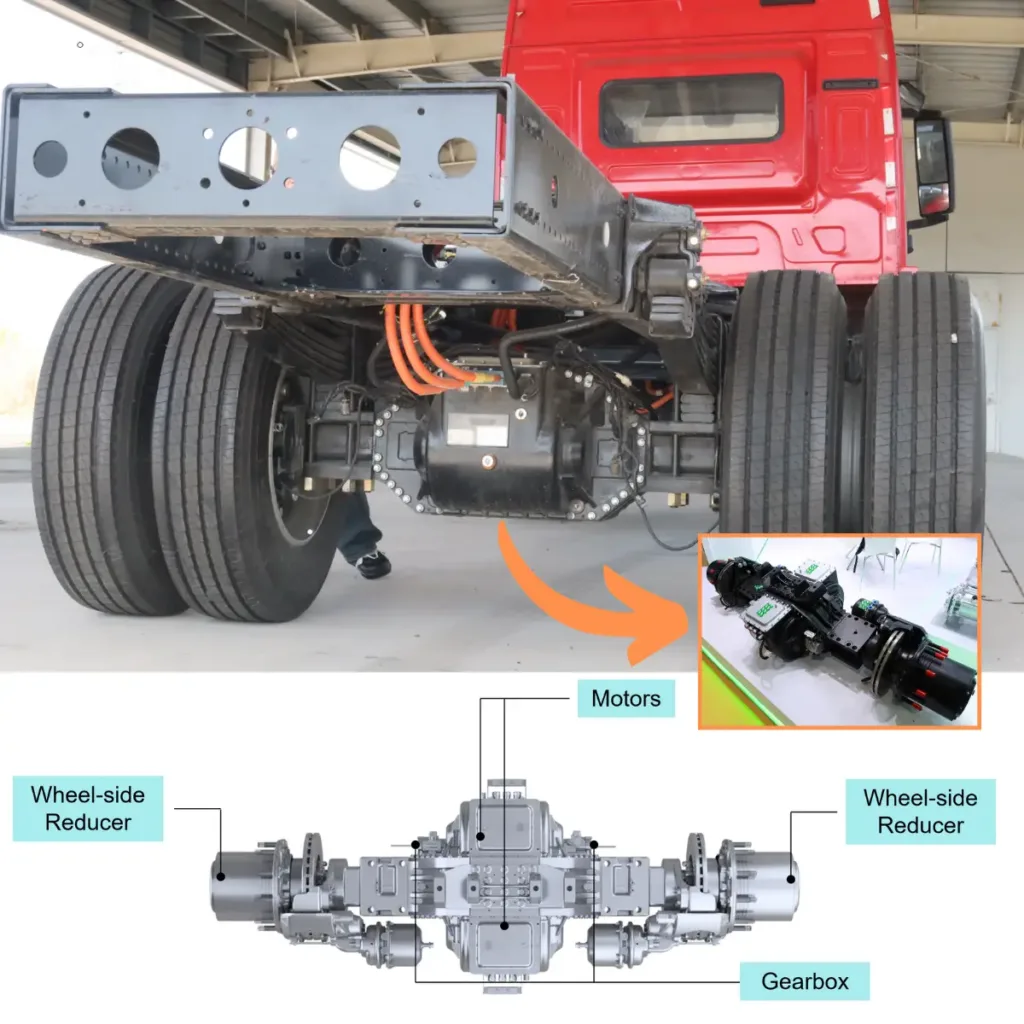
E-axles that integrates motors, MCU , transmission system electric drive axle
EV Industry

Electric Drive Axle for Truck: Introduction to Heavy-Duty Truck E-Powertrain Technology

Electric Drive Axle for Truck: Introduction to Heavy-Duty Truck E-Powertrain Technology Sales of electric trucks have continued to grow, driven by ambitious government policies and increasing demand for clean transportation. For heavy-duty truck manufacturers, adopting a reliable and high-performance electric drive axle for truck applications is essential to stay competitive in this fast-growing market. The Evolution of the Electric Drive Axle for Heavy-Duty Trucks The evolution of heavy-duty trucks has gone through three distinct phases, with a vision of the future of electric mobility shaping the landscape. First, traditional fuel-powered trucks dominated the roads, with cabs that were flat and high drag coefficient. These trucks relied on engine-based power systems located at the bottom of the cab. The next phase saw the emergence of gas-electric heavy-duty trucks, which retained the central drive model but swapped the engine for electric motors. However, these vehicles retained conventional propulsion systems that were bulky, inefficient, and compromised cargo space due to rear-mounted battery boxes. Today, battery-electric heavy-duty trucks typically use the electric axle for truck powertrain architecture. EV solutions with electric drive axles provide increased transmission efficiency and space flexibility. At the same time, cabin structures are redesigned to lower the center of gravity and improve aerodynamics. Why The Electric Drive Axle is a Better Choice for Battery-Electric Trucks With an advanced electric drive axle for truck platforms, manufacturers can redesign chassis structures to maximize space and performance.  For example, battery-electric heavy-duty trucks using our e-axle solution can eliminate traditional driveshafts, allowing the chassis structure to be redesigned to accommodate the battery spread flat across the chassis. This layout has many advantages: Placing the battery flat at the bottom allows for a larger battery capacity, extending the range while minimizing intrusion into the cargo area. By using a box-shaped beam frame structure, the battery pack is placed within the box frame structure, ensuring both battery safety and full utilization of the chassis load capacity. Lowering the vehicle’s overall center of gravity reduces the risk of rollover during cornering and improves driving stability and maneuverability. The overall appearance of the vehicle is improved. Analysis of Different Electric Powertrain Configurations for Heavy Trucks At present, the primary e-powertrain configurations for electric heavy trucks encompass several distinct forms: Different configurations of electric powertrains for heavy-duty trucks Analysis of configuration characteristics of different electric drive axles Comparison of dual-motor central drive and dual-motor distribute drive systems Example: Brogen’s Electric Drive Axle for Heavy-Duty Trucks Let’s take our 360 kW eAxle as an example, which is suitable for 6×4 and 4×2 tractors and heavy-duty trucks. Compared to similar eAxle products on the market, our eAxle integrates two motors, providing higher system power and torque with a smaller footprint, and has 100% regenerative braking capability, eliminating mechanical differentials. This results in lower space requirements, weight, and cost. Our electric drive axle installed on the heavy-duty truck Additional Safety Redundancy In addition, our electric drive axle system minimizes layout losses, reduces weight, and incorporates fault and safety strategies. The two drive systems are completely independent, consisting of a motor + 2-speed AMT and wheel-side reducer, using electronic differential technology and independently controlling the left and right drive systems. In the event of a single motor failure, the other motor can continue to operate normally, ensuring system safety. 23% System Weight Reduction Weight of different electric powertrain solutions for heavy trucks In contrast to the central drive system, our distributed drive system has achieved a weight reduction of 23.6%. Similarly, compared to the motor gearbox integration system, our distributed drive system has managed to reduce weight by 23.9%. Good Passability The distributed drive system boasts a 7.3% increase in ground clearance compared to the central drive system. Moreover, it achieves an even greater elevation of 11.7% when compared to the motor gearbox integration system. Higher Transmission Efficiency Compared to the central drive system, our distributed drive system demonstrates a 6% enhancement in overall transmission efficiency. High Safety Currently, heavy-duty trucks are only equipped with ABS and lack ASR, ESC, and EDL. With our EV motor’s electronic differential system strategy control, heavy trucks can be equipped with ASR/ESC safety configurations, improving vehicle traction, stability, and safety. Our Offerings of Electric Drive Axle for Trucks At Brogen, we provide a comprehensive range of electric drive axle solutions for trucks, from Class 1 to Class 8, and other commercial vehicles, including electrified trailers. Our e-axles feature mature, reliable technology designed for high performance and durability. Discover here: https://brogenevsolution.com/electric-axle-for-truck/ Business inquiry: contact@BrogenEVSolution.com Contact Us Get in touch with us by sending us an email, using the Whatsapp number below, or filling in the form below. We usually reply within 2 business days. Email: contact@brogenevsolution.com Respond within 1 business day Whatsapp: +8619352173376 Business hours: 9 am to 6 pm, GMT+8, Mon. to Fri.   LinkedIn channel Follow us for regular updates >   YouTube channel Ev systems introduction & industry insights > ContactFill in the form and we will get in touch with you within 2 business days.Please enable JavaScript in your browser to complete this form.Please enable JavaScript in your browser to complete this form. Name * FirstLast Work Email *Company Name *Your Project Type *– Please select –Car, SUV, MPVBus, coach, trainLCV (pickup truck, light-duty truck, etc.)HCV (heavy-duty truck, tractor, trailer, concrete mixer, etc.)Construction machinery (excavator, forklift, crane, bulldozer, loader, etc.)Vessel, boat, ship, yacht, etc.Others (please write it in the note)Your Interested Solutions *– Please select –Motore-AxleBatteryChassisAuxiliary inverterOBC / DCDC / PDUAir brake compressorEPS / EHPS / SbW / eRCBBTMSOthers (please write it in the note)Do you have other contact info? (Whatsapp, Wechat, Skype, etc.)Please introduce your project and your request here. * Checkbox * I consent to receive updates on products and events from Brogen, and give consent based on Brogen’s Privacy Policy. Submit
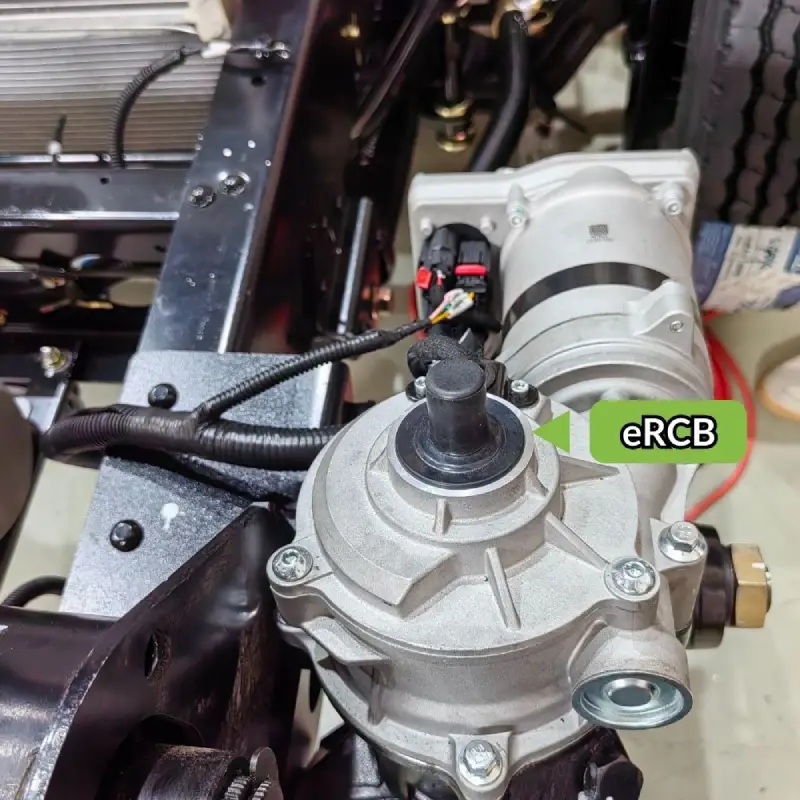
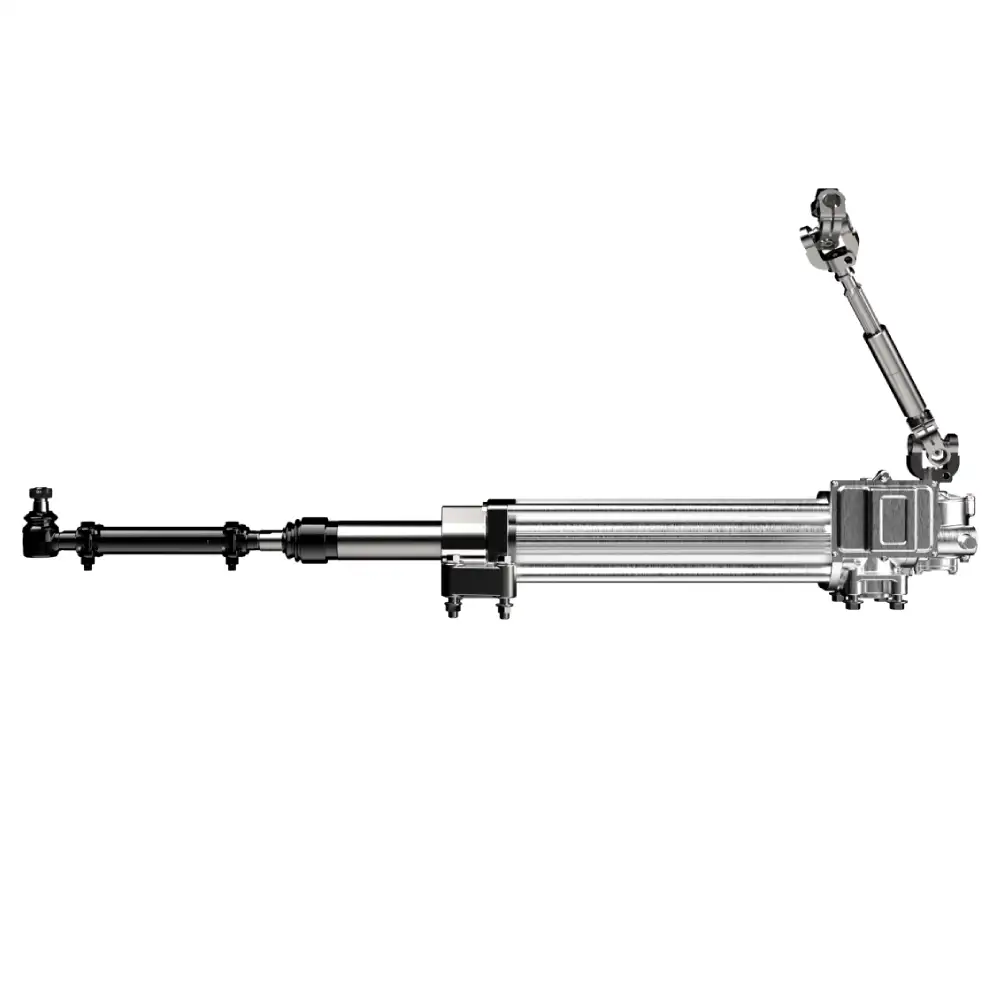
electric power steering system for bus
EV Industry

R-EPS System for (Hybrid) Battery Electric Buses

R-EPS System for (Hybrid) Electric Buses Introduction In 2023, an OEM (automotive manufacturer) for buses enlisted our expertise for the electric power steering system implementation in their buses. We recommended our latest R-EPS solution, specifically engineered for large commercial vehicles like buses. Our R-EPS (Rack-assist Electric Power Steering) system operates as a pure electric power steering system, regulating the power steering motor’s operation and torque output. This control is facilitated through the processing and calculation of inputs from the vehicle’s driving speed, steering torque, and steering angle, managed by the steering electronic control unit (ECU). The system serves as a pivotal device, optimizing the power steering effect to ensure smooth and precise vehicle maneuverability. Technical Features of Our R-EPS System for Buses Here are the key features of our R-EPS system for buses: Streamlined modification process and excellent adaptability to the recirculating ball hydraulic steering system layout. Reduced component count ensures high assembly efficiency. Responsive steering and exceptional maneuverability. High-efficiency design with low friction and operating noise. High product integration and compact structure for space optimization. Utilizes non-contact sensor with angle signal for precision. Equipped with overheating and under-voltage protection for enhanced reliability. Maintains steering assistance even during normal failure modes. Features IP67 protection for robust performance in varied conditions. Tailored to meet the demands of ADAS and automatic driving, particularly for large steering-by-wire chassis applications. Installation of the R-EPS on the Battery Electric Bus We’ve successfully integrated our EPS into the 8.5-meter pure electric bus, which has a maximum front axle load capacity of 4500 kg. Our electric power steering system has replaced several electro-hydraulic steering components originally present in the bus. Real Vehicle Calibration and Testing Our EPS system has undergone real vehicle calibration, ensuring optimal performance and functionality. Power Supply: Aligning with the original low-voltage wiring harness of the vehicle chassis, the power line is routed to the 24V battery, which then supplies power to the EPS. CAN Communication Integration: Receives vehicle speed signals in accordance with the vehicle CAN communication protocol. Activation of EPS System: Initiate the vehicle by shifting to the START gear, thereby entering the ready mode. Steering Function Implementation: Experience enhanced maneuverability with our EPS system’s responsive steering capabilities. From spot steering to normal road driving, our EPS provides noticeable power assistance, resulting in lighter steering torque and precise steering response. Active Return to Center Functionality: While navigating urban roads, our system ensures a smooth and seamless return to the center position when the steering wheel is released after turning to any angle, enhancing the overall driving experience and safety. Brogen Electric Power Steering Solutions At Brogen, we provide a wide range of electric power steering solutions for commercial vehicles. Learn more here: https://brogenevsolution.com/electric-power-steering-system-eps-oem-odm-manufacturer/ Business inquiry: contact@BrogenEVSolution.com Contact Us Get in touch with us by sending us an email, using the Whatsapp number below, or filling in the form below. We usually reply within 2 business days. Email: contact@brogenevsolution.com Respond within 1 business day Whatsapp: +8619352173376 Business hours: 9 am to 6 pm, GMT+8, Mon. to Fri. LinkedIn channel Follow us for regular updates > YouTube channel Ev systems introduction & industry insights > ContactFill in the form and we will get in touch with you within 2 business days.Please enable JavaScript in your browser to complete this form.Please enable JavaScript in your browser to complete this form. Name * FirstLast Work Email *Company Name *Your Project Type *– Please select –Car, SUV, MPVBus, coach, trainLCV (pickup truck, light-duty truck, etc.)HCV (heavy-duty truck, tractor, trailer, concrete mixer, etc.)Construction machinery (excavator, forklift, crane, bulldozer, loader, etc.)Vessel, boat, ship, yacht, etc.Others (please write it in the note)Your Interested Solutions *– Please select –Motore-AxleBatteryChassisAuxiliary inverterOBC / DCDC / PDUAir brake compressorEPS / EHPS / SbW / eRCBBTMSOthers (please write it in the note)Do you have other contact info? (Whatsapp, Wechat, Skype, etc.)Please introduce your project and your request here. * Checkbox * I consent to receive updates on products and events from Brogen, and give consent based on Brogen’s Privacy Policy. Submit
turkey electric bus project with our battery system electric bus battery
EV Industry

Brogen Delivering Electric Bus Battery Systems for Battery Electric Buses in Türkiye

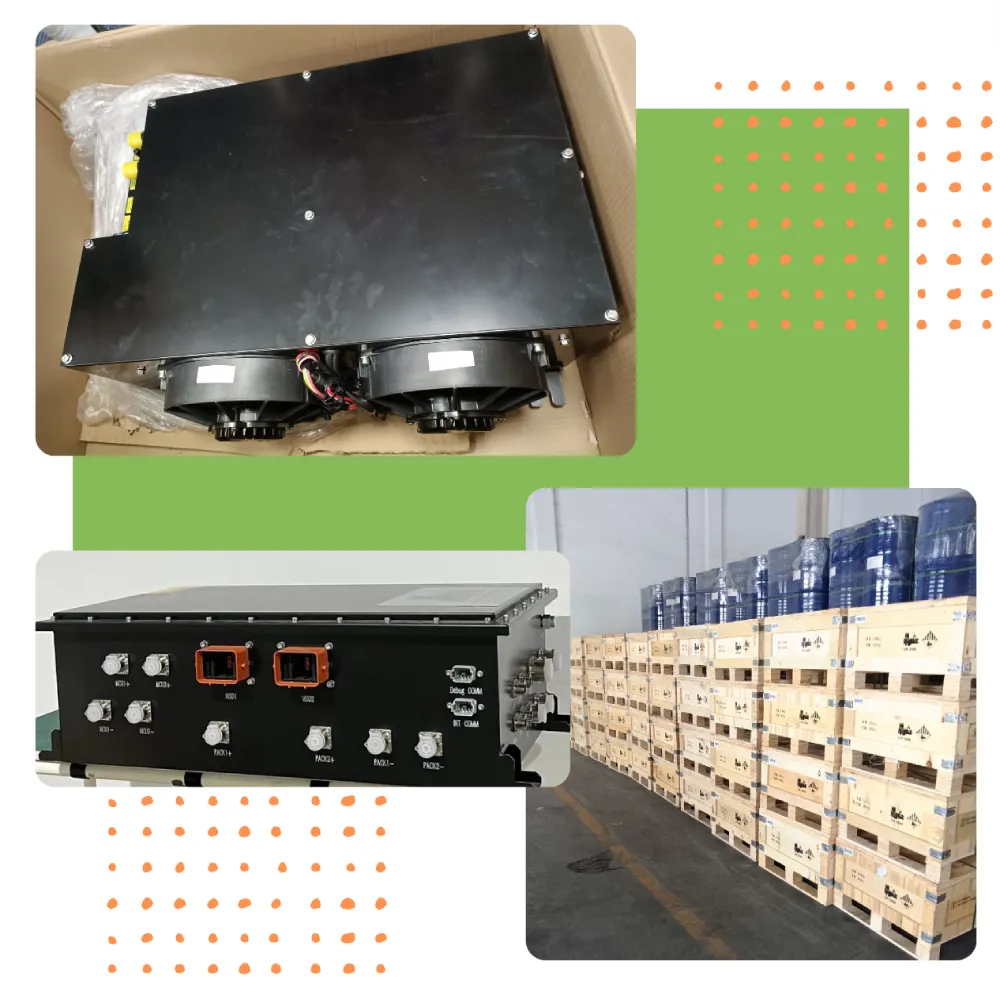
Brogen Delivering Electric Bus Battery Systems for 8-Meter and 12-Meter Battery Electric Buses (BEBs) in Türkiye Project Overview Project Start Time: 2022 Project Vehicle Types: 8-meter and 12-meter battery electric buses Country: Türkiye Systems Supplied: electric bus battery, PDU (with BMS), BTMS, EVCC Project Introduction In response to Türkiye’s growing environmental initiatives, a well-established Turkish commercial vehicle manufacturer embarked on an electric bus project, focusing on 8-meter and 12-meter models. Leveraging our expertise in electric bus battery systems, we delivered a tailored solution that included a 282 kWh battery system, a customized BMS, PDU, and a BTMS cooling unit, engineered to match the bus architecture and meet European certification requirements. This case study outlines our approach to overcoming technical challenges and providing comprehensive support throughout the project. Client Background The client, a prominent commercial vehicle manufacturer in Türkiye, has a strong reputation for producing traditional fuel-powered buses. In 2022, motivated by Türkiye’s environmental policies, the company shifted its focus to electric buses, initiating a new product for 8-meter and 12-meter electric models. Given our history as their supplier of EHPS and air brake compressors, they entrusted us with developing a high-quality electric bus battery system for their new fleet. Key Challenges Custom Electric Bus Battery System Design: The 8-meter and 12-meter electric buses required different energy capacities, battery layouts, and installation architectures, demanding a fully customized solution for each model. Uncommon High-Voltage Architecture: The buses used a high-voltage e-powertrain, which is not a mainstream specification for electric bus battery packs. This required careful component matching, safety validation, and specialized system design. Space Constraints and System Integration: The battery packs needed to fit within limited chassis space while still delivering the required energy, cooling performance, and safety compliance. Preparing for the shipment of the battery systems How We Designed the Electric Bus Battery Solution Requirement Analysis & System Simulation Conducted detailed simulations and calculations based on the client’s vehicle specifications, including speed, range, and certification requirements. Designed custom battery packs with different capacities to meet the distinct needs of the 8-meter and 12-meter buses. Engineering Development Developed a specialized BMS tailored to the buses’ specifications. Created circuit diagrams and optimized the internal and external wiring to fit the vehicle layouts. Carefully selected connectors, considering power currents and interlock requirements. Ensured compatibility between the charging infrastructure and the battery system, adhering to European standards. Joint Testing & Validation Conducted joint testing with the client to verify the charging system’s functionality. Provided technical support during the installation and initial operation phases, including software updates and remote troubleshooting. Systems We Provided Battery modules BMS PDU Power output wiring harness Vehicle communication wiring harness CCS charging seat wiring harness Battery input harness Power wire harness between the battery boxes Communication wiring harness between the battery boxes EVCC Charge harness Battery Packs Used in This Project Our standard battery pack Our battery factory The battery packs used in this project Other Systems in This Project 8 kW BTMS BMS with PDU Wiring harness Brogen Tailored Electric Bus Battery Solution At Brogen, we provide tailored electric bus battery solutions, covering battery packs, BMS, PDU, BTMS, and related subsystems. Built on mature and highly reliable technology, our solutions use premium battery cells from globally recognized suppliers. Today, our electric bus battery systems are already deployed in mass production across global markets. Learn more here: https://brogenevsolution.com/ev-battery-solutions-for-bus-hcv/ Business inquiry: contact@BrogenEVSolution.com Contact Us Get in touch with us by sending us an email, using the Whatsapp number below, or filling in the form below. We usually reply within 2 business days. Email: contact@brogenevsolution.com Respond within 1 business day Whatsapp: +8619352173376 Business hours: 9 am to 6 pm, GMT+8, Mon. to Fri. LinkedIn channel Follow us for regular updates > YouTube channel Ev systems introduction & industry insights > ContactFill in the form and we will get in touch with you within 2 business days.Please enable JavaScript in your browser to complete this form.Please enable JavaScript in your browser to complete this form. Name * FirstLast Work Email *Company Name *Your Project Type *– Please select –Car, SUV, MPVBus, coach, trainLCV (pickup truck, light-duty truck, etc.)HCV (heavy-duty truck, tractor, trailer, concrete mixer, etc.)Construction machinery (excavator, forklift, crane, bulldozer, loader, etc.)Vessel, boat, ship, yacht, etc.Others (please write it in the note)Your Interested Solutions *– Please select –Motore-AxleBatteryChassisAuxiliary inverterOBC / DCDC / PDUAir brake compressorEPS / EHPS / SbW / eRCBBTMSOthers (please write it in the note)Do you have other contact info? (Whatsapp, Wechat, Skype, etc.)Please introduce your project and your request here. * Checkbox * I consent to receive updates on products and events from Brogen, and give consent based on Brogen’s Privacy Policy. Submit
Spain-Electric-Boat-EV-Project-With-EV-B maritime battery atteries
EV Industry

Brogen Maritime Battery Solution Powers an Electric Boat in Spain

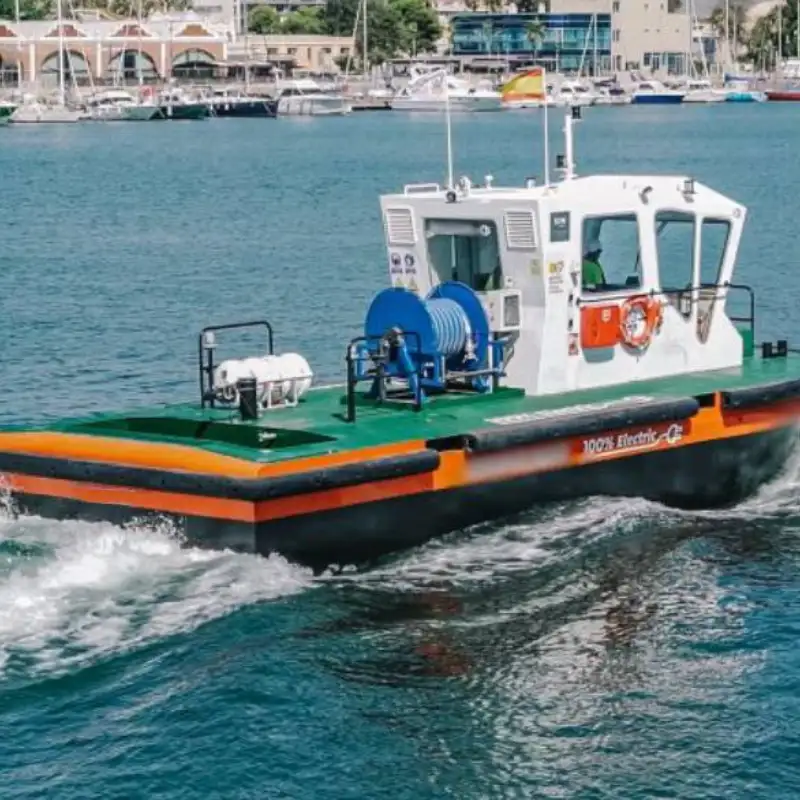
Brogen Maritime Battery System Powers Spain’s Electric Boat Project In 2023, we partnered with a leading Spanish shipbuilding company to deliver a battery-electric boat, driving forward zero-emission maritime solutions. By integrating advanced maritime battery technology, this project contributes to cleaner ports, reduced marine pollution, and the decarbonization of marine transport. Project Challenge: Designing a Reliable Maritime Battery System The client required a robust and fully compliant maritime battery solution to power the electric vessel’s propulsion system. Key challenges included: Meeting strict maritime redundancy regulations Ensuring fully independent battery packs with complete isolation across the mechanical structure, electrical architecture, thermal management, and control units Delivering long-lasting, high-performance battery packs capable of supporting continuous vessel operations Our Solution: Custom Maritime Battery & Electric Propulsion To address these requirements, we designed and delivered a custom electric propulsion and maritime battery solution, including: Maritime-grade battery packs with multi-group isolation Advanced BMS with a three-level architecture: slave, master, and supervisory controllers PDU, wiring harnesses, and battery racks Our optimized configuration featured two independent battery groups, each containing two clusters, with 10 battery modules per cluster. This design ensured complete isolation and redundancy, reducing the risk of cell imbalance, overcharging, and over-discharging. The maritime battery system we provided for the client Implementation & Collaboration Throughout the design and implementation phases, our team worked closely with the client’s technical staff to fine-tune the systems. Our pre-sales and engineering teams ensured every detail, from mechanical integration to software configuration, aligned with the unique specifications of the electric boat. Six months after project completion, the system continues to operate flawlessly, demonstrating exceptional reliability, efficiency, and compliance with all maritime safety standards. Results: Seamless Operation & Regulatory Compliance Successful deployment of the company’s first electric boat powered by a reliable maritime battery system High redundancy and isolation meet stringent maritime regulations Sustained, reliable performance six months post-installation Recognition from the client for professionalism, innovation, and technical excellence Praise From The Client “Your team’s ability to address challenges with professionalism and efficiency has been a major factor in the project’s success. This experience has not only strengthened our professional relationship but also reinforced our trust in you as a valuable and reliable partner.” said the President. Brogen Maritime Battery Solutions At Brogen, we provide tailored maritime battery solutions to power vessel electrification with maximum safety, reliability, and sustainability. Our offerings include lithium-ion marine traction battery packs, modular battery clusters, and containerized marine traction battery systems. Explore here: https://brogenevsolution.com/marine-traction-battery/ Looking for an EV solution for your marine electrification project? Reach out to us at contact@BrogenEVSolution.com Contact Us Get in touch with us by sending us an email, using the Whatsapp number below, or filling in the form below. We usually reply within 2 business days. Email: contact@brogenevsolution.com Respond within 1 business day Whatsapp: +8619352173376 Business hours: 9 am to 6 pm, GMT+8, Mon. to Fri.   LinkedIn channel Follow us for regular updates >   YouTube channel Ev systems introduction & industry insights > ContactFill in the form and we will get in touch with you within 2 business days.Please enable JavaScript in your browser to complete this form.Please enable JavaScript in your browser to complete this form. Name * FirstLast Work Email *Company Name *Your Project Type *– Please select –Car, SUV, MPVBus, coach, trainLCV (pickup truck, light-duty truck, etc.)HCV (heavy-duty truck, tractor, trailer, concrete mixer, etc.)Construction machinery (excavator, forklift, crane, bulldozer, loader, etc.)Vessel, boat, ship, yacht, etc.Others (please write it in the note)Your Interested Solutions *– Please select –Motore-AxleBatteryChassisAuxiliary inverterOBC / DCDC / PDUAir brake compressorEPS / EHPS / SbW / eRCBBTMSOthers (please write it in the note)Do you have other contact info? (Whatsapp, Wechat, Skype, etc.)Please introduce your project and your request here. * Checkbox * I consent to receive updates on products and events from Brogen, and give consent based on Brogen’s Privacy Policy. Submit
Axial Flux Motor on Concrete Mixer Truck
EV Industry

Battery-Electric Concrete Mixer Truck Project With Axial-Flux Motor E-Axles

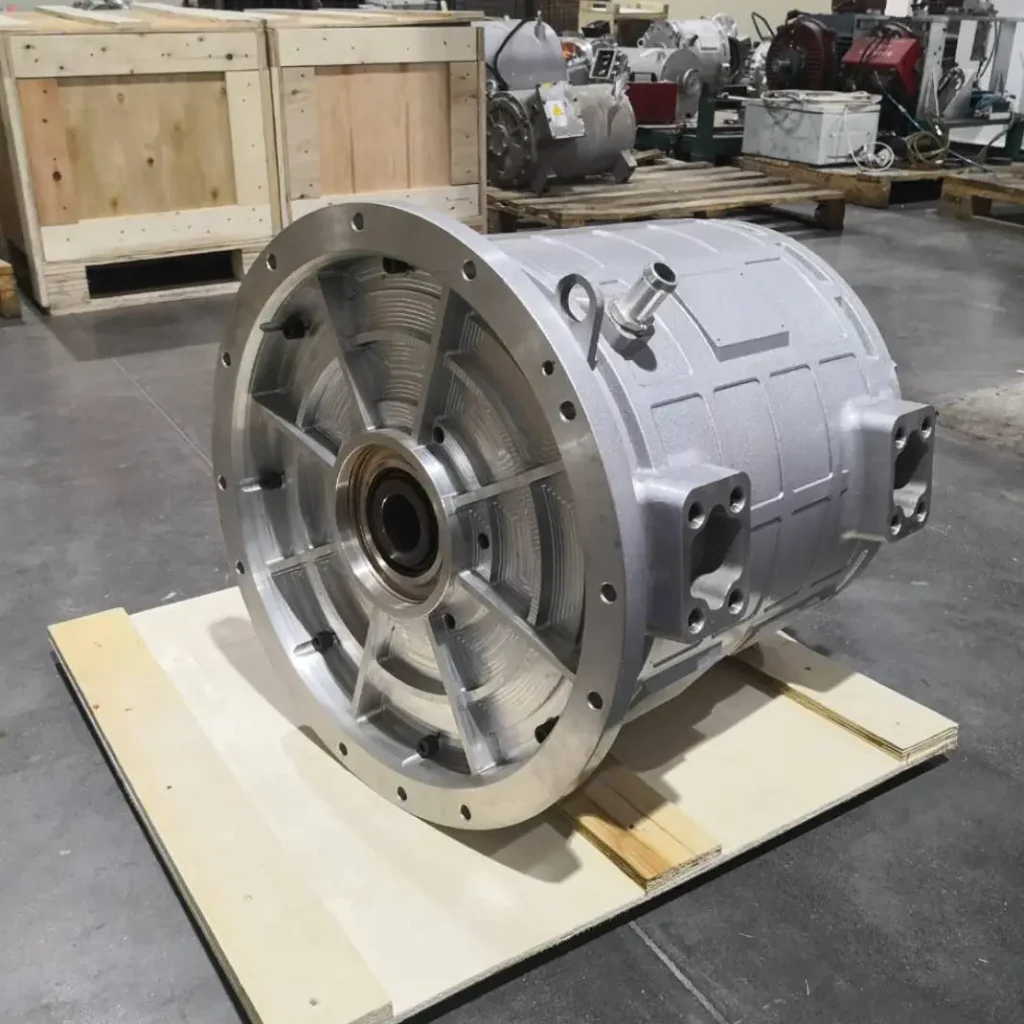
Battery-Electric Concrete Mixer Truck With Axial Flux Motor E-Axles Client: A concrete mixer truck manufacturer Demand: An electric axle solution for their 31-ton heavy-duty battery-electric concrete mixer trucks The electrification trend in commercial vehicles extends to concrete transportation, driven by a dual desire for environmental sustainability and cost savings. Facing the challenge of high fuel costs, concrete mixer truck manufacturers seek innovation solutions to optimize efficiency and reduce operational costs. Description In 2023, a leading concrete mixer truck manufacturer approached us for an EV solution for their 31-ton heavy-duty battery-electric concrete mixer requirements. Understanding the industry’s need for cost-effective electrification, our experienced experts recommended the e-axle solution with axial flux motors for heavy-duty trucks to meet their demands. The 460 kW E-Axle Solution for the Battery-Electric Concrete Mixer Our integrated e-axle system features two axial flux motors, each with 230 kW of power. With the maximum power of 460 kW, the drivetrain system achieves a wheel-end transmission efficiency exceeding 96%, and the maximum gradeability reaches 50%. This also helps effectively increase the cruising range. Benefits of the E-Axle Solution With Axial Flux Motors Enhanced transmission efficiency and range: since the weight and size of the axial flux motor is 50% that of the traditional radial flux motor, this e-axle system uses the three-speed automatic transmission. The first, second, and third gears each have a two-stage transmission. While significantly improving transmission efficiency, the system operates in the high-efficiency range at almost any vehicle speed. Dual-mode shifting: The dual-mode shifting mode can achieve differential shifting between the front and rear axles as well as power compensation. There’s no interruption of power to the vehicle during the shifting process, with a shift response time of less than 0.6 seconds. Optimized vehicle layout: thanks to the use of the axial flux motors, this solution offers a more spacious vehicle layout, allowing the entire vehicle’s traction battery pack to be positioned under the vehicle’s main beams. As a result, the electric concrete mixer truck’s center of gravity is lowered by more than 100 mm compared to conventional gasoline-powered vehicles. And it’s 130 mm lower compared to similar all-electric concrete mixer trucks from other brands. Thus, this fully electric concrete mixer truck has better roll stability, ensuring safer driving. Results The application of the lightweight and more efficient axial flux motor system has enabled this 31-ton new energy concrete mixer truck to achieve a range of 260 km (according to the steady-speed method), with an actual operational range of up to 180 km, significantly outperforming similar products on the market. A driver of this battery-electric concrete mixer truck remarked, “This electric truck has strong power and is comfortable to drive, just like driving a car. Plus, charging it once at night is basically enough for a day’s use, and charging speed is also very fast, almost done in an hour.” Brogen Electric Powertrain Solutions At Brogen, we provide electric powertrain solutions for commercial vehicles, ranging from mature and reliable direct-drive motors to integrated e-powertrains (motor, transmission, and controller) as well as compact, high-efficiency e-axle solutions. Our offerings help EV manufacturers accelerate development and reduce R&D costs for their projects. If you’re looking for a tailored EV solution, don’t hesitate to contact us at contact@BrogenEVSolution.com Contact Us Get in touch with us by sending us an email, using the Whatsapp number below, or filling in the form below. We usually reply within 2 business days. Email: contact@brogenevsolution.com Respond within 1 business day Whatsapp: +8619352173376 Business hours: 9 am to 6 pm, GMT+8, Mon. to Fri. LinkedIn channel Follow us for regular updates > YouTube channel Ev systems introduction & industry insights > ContactFill in the form and we will get in touch with you within 2 business days.Please enable JavaScript in your browser to complete this form.Please enable JavaScript in your browser to complete this form. Name * FirstLast Work Email *Company Name *Your Project Type *– Please select –Car, SUV, MPVBus, coach, trainLCV (pickup truck, light-duty truck, etc.)HCV (heavy-duty truck, tractor, trailer, concrete mixer, etc.)Construction machinery (excavator, forklift, crane, bulldozer, loader, etc.)Vessel, boat, ship, yacht, etc.Others (please write it in the note)Your Interested Solutions *– Please select –Motore-AxleBatteryChassisAuxiliary inverterOBC / DCDC / PDUAir brake compressorEPS / EHPS / SbW / eRCBBTMSOthers (please write it in the note)Do you have other contact info? (Whatsapp, Wechat, Skype, etc.)Please introduce your project and your request here. * Checkbox * I consent to receive updates on products and events from Brogen, and give consent based on Brogen’s Privacy Policy. Submit
South korea light commercial truck project
EV Industry

Electric Light Duty Truck Project in South Korea

Electric Light Duty Truck Project in South Korea With Our E-Powertrain Project Overview In 2021, a South Korean express delivery company sought our expertise for a comprehensive e-powertrain solution for their light-duty truck project. We delivered a complete solution, including the 120 kW electric powertrain, controller, and other essential automotive components. Additionally, we provided professional technical support to ensure their electric light-duty trucks were operational quickly and efficiently. Our E-Powertrain Solution After thoroughly understanding their requirements, we proposed a comprehensive EV solution that includes the 120 kW integrated 2-in-1 electric powertrain of motor and gearbox, MCU, water pump, EHPS, DC/DC converter, and air conditioning compressors. This combination ensured that our solution perfectly aligned with the unique demands of their EV projects. How We Worked Together Our collaboration extended beyond the initial proposal phase. We actively supported the customer throughout the post-sales journey, providing guidance on connection and installation processes and offering remote technical assistance whenever necessary. This ensured a smooth transition to electric vehicles for our client. Results In just ten days, our electric powertrain solution had the customer’s vehicles up and running. The success made local news. The customer thanked us for a transformative journey that successfully converted the electric light-duty truck into their fleet and laid a solid foundation for their electric future. We’re currently in active discussions with the customer about electrification options for other models in their fleet. E-Powertrain System Used In This Project Motor parameters: Rated power: 45 kW – 60 kW (customizable) Peak power: 100 kW – 120 kW (customizable) Rated torque: 120 N.m Peak torque: 265 N.m – 280 N.m (customizable) Rated speed: 3600 rpm Peak speed: 12000 rpm Brogen E-Powertrain Solution for Light Trucks, Vans, Minibuses At Brogen, we provide mature and reliable integrated electric powertrain solutions (motor, gearbox, controller) for light commercial vehicles, including light trucks, vans, minibuses, and more. Learn more here: https://brogenevsolution.com/electric-motors-for-lcvs/ Business inquiry: contact@BrogenEVSolution.com Contact Us Get in touch with us by sending us an email, using the Whatsapp number below, or filling in the form below. We usually reply within 2 business days. Email: contact@brogenevsolution.com Respond within 1 business day Whatsapp: +8619352173376 Business hours: 9 am to 6 pm, GMT+8, Mon. to Fri.   LinkedIn channel Follow us for regular updates >   YouTube channel Ev systems introduction & industry insights > ContactFill in the form and we will get in touch with you within 2 business days.Please enable JavaScript in your browser to complete this form.Please enable JavaScript in your browser to complete this form. Name * FirstLast Work Email *Company Name *Your Project Type *– Please select –Car, SUV, MPVBus, coach, trainLCV (pickup truck, light-duty truck, etc.)HCV (heavy-duty truck, tractor, trailer, concrete mixer, etc.)Construction machinery (excavator, forklift, crane, bulldozer, loader, etc.)Vessel, boat, ship, yacht, etc.Others (please write it in the note)Your Interested Solutions *– Please select –Motore-AxleBatteryChassisAuxiliary inverterOBC / DCDC / PDUAir brake compressorEPS / EHPS / SbW / eRCBBTMSOthers (please write it in the note)Do you have other contact info? (Whatsapp, Wechat, Skype, etc.)Please introduce your project and your request here. * Checkbox * I consent to receive updates on products and events from Brogen, and give consent based on Brogen’s Privacy Policy. Submit
electric passenger car
EV Industry

Understanding the 800V High Voltage Platform in Electric Vehicles

Understanding the 800V High Voltage Platform in Electric Vehicles Recently, various new energy vehicle companies have been vigorously promoting the charging speed of electric cars as one of their key selling points: 5 minutes of charging for 200 kilometers, 12 minutes for 500 kilometers. And among them, the 800V high-voltage platform is repeatedly mentioned. What is the 800V High Voltage Platform? 800V is a relatively broad term. It does not mean that the entire high-voltage electrical system of the vehicle can always reach 800V. Instead, it’s an average. The voltage range of the entire vehicle is within 550V to 950V, which can be called an 800V high-voltage platform. Currently, most new energy vehicles use a 400V platform, with the voltage range of the entire vehicle electrical system between 230V and 450V. The mainstream 800V high-voltage platforms currently available in the market mainly consist of three types: the first type is full-range 800V, where all of the vehicle’s electrical systems, such as motors, batteries, controllers, air conditioners, DCDC, etc., support 800V; the second type is key components supporting 800V, such as the electric drive system and battery supporting 800V, while other components such as the air conditioner still use 400V; the third type is only the battery supporting 800V fast charging, while other components remain at 400V. In fact, the 800V high-voltage platform concept wasn’t new in 2023. As early as 2019, Porsche introduced the first production model, the Taycan, with an 800V high-voltage platform. However, due to its high price, the 800V platform was once almost a luxury car-only configuration. By 2023, many 800V high-voltage platform vehicles will have flooded the market, intense competition will have driven prices even lower, and more consumers will be considering whether a vehicle has an 800V platform as an important purchase consideration. What are the benefits of the 800V high-voltage platform? The reason why automakers choose to upgrade to the 800V high-voltage platform is twofold: on the one hand, it can significantly improve the charging and recharging speed, and on the other hand, because the 800V high-voltage platform can reduce energy loss compared to the 400V platform, it can indirectly improve the vehicle’s range. However, the energy loss advantage of the 800V high-voltage platform is not very significant. This is because currently, the highest efficiency of motors on 400V platforms can already reach about 97 to 98%. The room for improvement with the 800V high voltage platform is quite limited. If the 400V platform is well optimized, the energy loss can still be reduced. That’s why most car manufacturers have not promoted this aspect very much. In terms of charging speed, the advantage of the 800V high-voltage platform becomes clear. Power = Voltage x Current (P = UI). To increase charging power, you either increase current or voltage. However, there aren’t many automakers currently choosing to increase charge power through high current schemes, Tesla being one of the few. The biggest drawback of high-current systems is heating. As the current increases, the heat generated by the entire system increases geometrically, leading to overheating of high-voltage harnesses and battery packs. From an energy consumption perspective, heating increases the energy dissipated in the system. From a safety perspective, battery pack overheating also increases safety risks. In comparison, most automakers currently choose to increase voltage to solve charging efficiency issues. By increasing the voltage to achieve the same charging power, not only does the charging speed increase, but the current is also reduced accordingly, reducing the heat generated by the harness and battery. It also allows the use of thinner wire harnesses. What are the challenges of the 800V high voltage platform? However, whether the 800V high voltage platform can be used for fast charging during the charging process depends not only on whether the vehicle itself supports 800V, but also on the cooperation of the charging stack. Currently, there are relatively few 800V chargers on the market. However, some models are equipped with on-board voltage boosting systems that increase the charging voltage to 800V during the charging process, ultimately achieving fast charging. Brogen EV Solutions for the 800V high voltage platform At Brogen, we provide 800V EV system solutions that help OEMs stay ahead in a fast-evolving industry. Our offerings include 800V onboard chargers, oil-cooled hairpin-motor e-axles, and a range of high-performance components engineered for next-generation electric vehicle platforms.  Business inquiry: contact@BrogenEVSolution.com Contact Us Get in touch with us by sending us an email, using the Whatsapp number below, or filling in the form below. We usually reply within 2 business days. Email: contact@brogenevsolution.com Respond within 1 business day Whatsapp: +8619352173376 Business hours: 9 am to 6 pm, GMT+8, Mon. to Fri. LinkedIn channel Follow us for regular updates > YouTube channel Ev systems introduction & industry insights > ContactFill in the form and we will get in touch with you within 2 business days.Please enable JavaScript in your browser to complete this form.Please enable JavaScript in your browser to complete this form. Name * FirstLast Work Email *Company Name *Your Project Type *– Please select –Car, SUV, MPVBus, coach, trainLCV (pickup truck, light-duty truck, etc.)HCV (heavy-duty truck, tractor, trailer, concrete mixer, etc.)Construction machinery (excavator, forklift, crane, bulldozer, loader, etc.)Vessel, boat, ship, yacht, etc.Others (please write it in the note)Your Interested Solutions *– Please select –Motore-AxleBatteryChassisAuxiliary inverterOBC / DCDC / PDUAir brake compressorEPS / EHPS / SbW / eRCBBTMSOthers (please write it in the note)Do you have other contact info? (Whatsapp, Wechat, Skype, etc.)Please introduce your project and your request here. * Checkbox * I consent to receive updates on products and events from Brogen, and give consent based on Brogen’s Privacy Policy. Submit
blade battery
EV Industry

What is Blade Battery? New EV Battery Technology

What is Blade Battery? New EV Battery Technology 1. What is a blade battery? The blade battery is a lithium iron phosphate battery for electric vehicles. The battery cell has a special design with a common length of 96 cm and width of 9 cm, so it’s like a blade and can be inserted into the battery pack. While the standard LFP battery contains the structure of cell, module, pack, the design of the blade battery pack eliminates the battery module, which saves more space and thus greatly increases the space utilization and power density. When assembling battery packs with blade batteries, the inherent strength of the blade battery is leveraged to reduce the size of crossbeams and other components within the battery pack. Under random vibration loads, the deformation of the module is significant, while the deformation of the blade battery cells is minimal. For non-module battery packs, by modifying the structure of the battery pack, the rectangular batteries are arranged vertically and inserted into the pack, simplifying the battery pack structure and improving the utilization of internal space. 2. What about the safety of blade batteries? The blade battery successfully passed the nail penetration test and maintained a low surface temperature with no smoke or fire emissions. But its safety credentials go beyond that. The battery was tested in seven safety dimensions, including internal and external short circuits, overcharging, collisions, high pressure, connections and hazardous gas assessments. It also successfully passed collision simulation and crush tests. 3. How is the performance of blade batteries? In terms of the performance of the blade battery, its high energy density provides enhanced endurance, with a maximum charging power of more than 230 kW. A mid-size vehicle equipped with BYD’s blade battery can easily exceed 700 km in range. In addition, the battery pack uses a wide-temperature efficient heat pump system and direct cooling and heating technology, which enables rapid temperature rise at low temperatures to meet driving demands. 4. What are the advantages of the blade battery technology? The cost-saving aspect of the Blade battery is remarkable. As the main focus of development in the new energy vehicle sector shifts from simply increasing range to safer and smarter solutions, the lower cost advantage of lithium iron phosphate becomes increasingly important. By consistently reducing costs, the blade battery solution improves volume utilization by 50%, reduces component costs by 45%, and lowers overall costs by over 30%. 5. What are the applications of the blade battery? In terms of applications, the blade battery is not limited to passenger cars; it is also suitable for electric buses, vans, light-duty trucks, and heavy-duty trucks. For example, a light-duty truck equipped with a 45 kWh Blade battery pack can travel up to 280 kilometers on a single charge, making it ideal for urban delivery applications. Brogen Blade Battery Solutions for Commercial Vehicles At Brogen, our Blade battery solution ranges from 10 kW to 900 kW to meet the energy needs of different commercial vehicles. It also uses an intelligent Battery Management System platform that covers both low and high voltage. Learn more here: https://brogenevsolution.com/blade-battery-technology-for-electric-commercial-vehicles/ Business inquiry: contact@BrogenEVSolution.com

axial flux motor - 2
EV Industry

Axial Flux Motors – Frequently Asked Questions (FAQ)

Axial Flux Motors – Frequently Asked Questions (FAQ) 1. What are Axial Flux Motors? Axial flux motors differ from radial flux motors in that their magnetic flux direction is axial, with current-carrying conductors arranged in a radial pattern. Both the stator and rotor cores have a disc-like structure. 2. What are the advantages and benefits of Axial Flux Motors? In situations where they have the same power, they have a smaller volume and lighter weight. For instance, our axial flux motor weighs and occupies approximately half the space of a traditional radial flux motor, resulting in higher power and torque density. 3. Why aren’t Axial Flux Motors popular? While radial flux motors are well understood, and manufacturing methods are well-established, axial flux motors face significant challenges in design and production. The gap between the stator and rotor, known as the air gap, is crucial in the motor’s magnetic circuit. Axial flux rotor lying flat on the stator significantly increases the air gap area, demanding high precision in surface smoothness and gap uniformity. This translates to stringent requirements for manufacturing and assembly precision, leading to high production costs and low production flexibility. The manufacturing difficulty also hinders the scalability of axial flux motors, resulting in a smaller market capacity with insufficient component matching. However, our axial flux motor has overcome these challenges, achieving mass production and undergoing 15,000 km of safety testing in vehicles like buses and heavy trucks, ensuring stability and safety. 4. What are the applications of Axial Flux Motors? They find application in various scenarios: Low-Power Applications: Compact, lightweight, and stable, suitable for power requirements below 5 kW. Widely used in automotive cooling systems, as well as in areas like garden machinery and drones. High-Power Commercial & Industrial Use: High-power axial flux motors, especially those with a single rotor core, are suitable for commercial vehicle propulsion, heating, cooling, hydraulics, fans, and other industrial applications. Compact Systems: Axial flux motors with dual rotor cores are ideal for compact vehicle structures, making them suitable for car drives and other systems with limited space. 5. What electric vehicles are they suitable for? They can be applied in various electric vehicles, including: Cooling systems in passenger cars. Drive systems in mid-size and large SUVs. Electric drive axles in heavy-duty trucks, mining trucks, and tractors. Electrification of mixing tank and electric drive axles in mixer trucks. Electric drive axles in buses. Business Inquiry: contact@brogenevsolution.com

Scroll to Top