
Bus Electrification Solutions

Our Bus Electrification Solutions provide OEMs, bus manufacturers, and engineering partners with modular, engineering-ready systems for both new electric bus development and diesel-to-electric conversion projects.
The systems are engineered to support a wide range of public transport vehicles, including urban buses, highway coaches, articulated buses, airport shuttles, and trolley buses, and enable platform-level integration. With multiple domestic and international deployments, these solutions have proven to provide a mature and reliable foundation for accelerating electric bus projects, optimizing energy efficiency, extending range, and ensuring consistent operational reliability.
Email: contact@brogenevsolution.com
Our Bus Electrification Solutions Advantages
Bus/Coach
Van
Train
Tram
01
Lightweight, Passenger-Oriented System Design
Our electric bus solutions are engineered with a lightweight, system-level design approach to reduce energy consumption while preserving structural integrity and safety. Optimized packaging and mass distribution improve vehicle dynamics and axle load managemnet, enabling higher passenger capacity and better operational efficiency without compromising ride comfort or durability.
02
Proven Safety and In-Service Reliability
Our EV systems have been validated through extensive testing and real-world deployment in mass-production electric buses operated by leading OEMs. Designed to meet demanding urban duty cycles, the systems deliver high levels of functional safety, thermal stability, and long-term reliability, ensuring compliance with relevant industry standards and public transport requirements.
03
Advanced EV Architecture for Bus Applications
We integrate advanced electric powertrain technologies to enable efficient, low-noise, and highly controllable electric buses. By combining high-performance hardware with intelligent control strategies, our solutions support smooth drivability, regenerative braking optimization, and future software evolution, helping OEMs develop competitive and future-ready electric bus platforms.
Project Scope & Intended Use
Target Applications
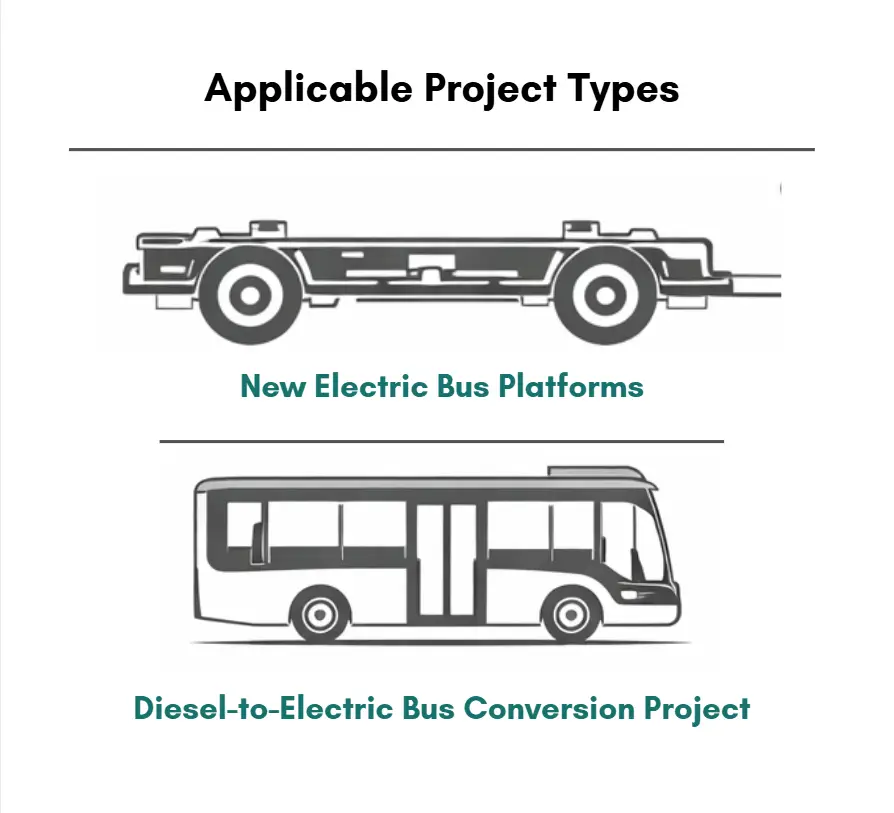
- OEM Electric Bus Platform Development:
- Electrification of new electric bus platforms for urban and interccity applications
- Structured Commercial Conversion Projects:
- Diesel-to-electric conversion for commercial bus fleets
- Requires professional vehicle-level integration capability
*We do not provide turnkey vehicle conversions, complete vehicles, or plug-and-play full conversion kits.
Vehicle Platforms & Project Scope
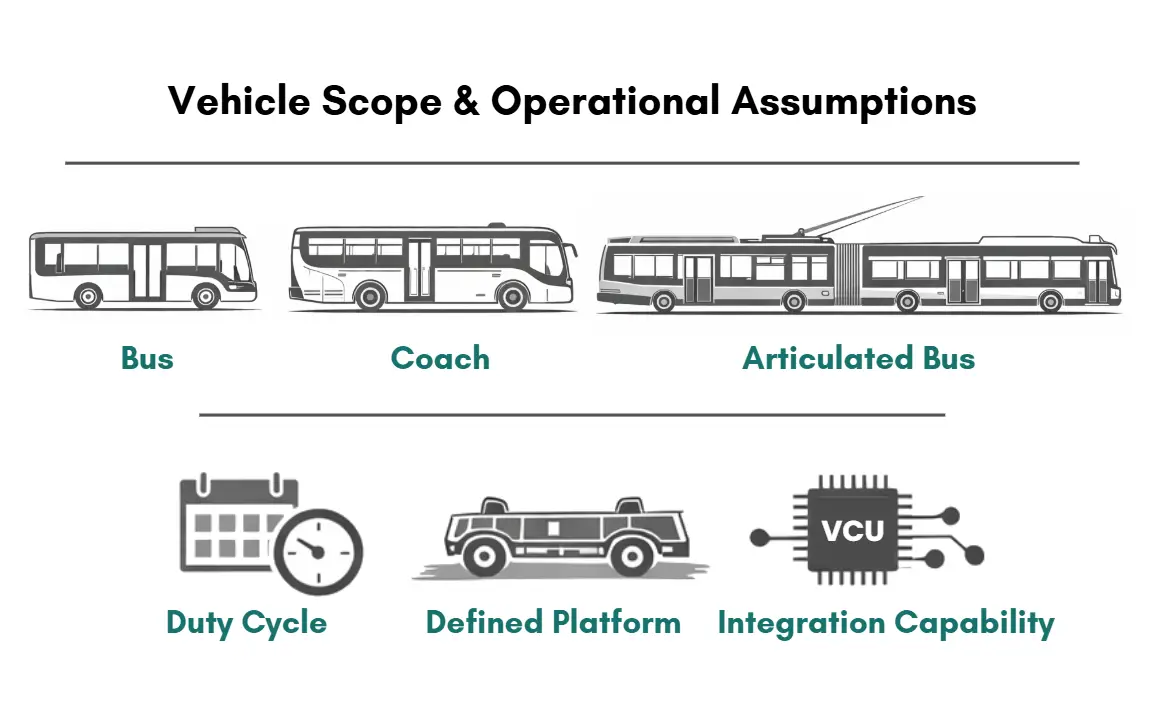
- Designed for city buses, coaches, articulated buses, and trolleybuses, typically 6 m to 18 m
- Applicable to projects with a defined vehicle platform & duty cycle
- Intended for OEMs, professional EV builders, and engineering teams with in-house or partner-level system integration capability
*Responsibility for vehicle-level integration, system calibration, and validation remains with the OEM or integrator.
Our Bus Electrification Solutions
Electric Powertrain Solutions for Electric Buses
We provide electric powertrain solutions for electric bus applications, engineered to support a wide range of vehicle platforms and operating requirements. Multiple drivetrain architectures, including central drive motor, e-axle, and distributed solutions, are available to match different vehicle layouts and operational requirements.
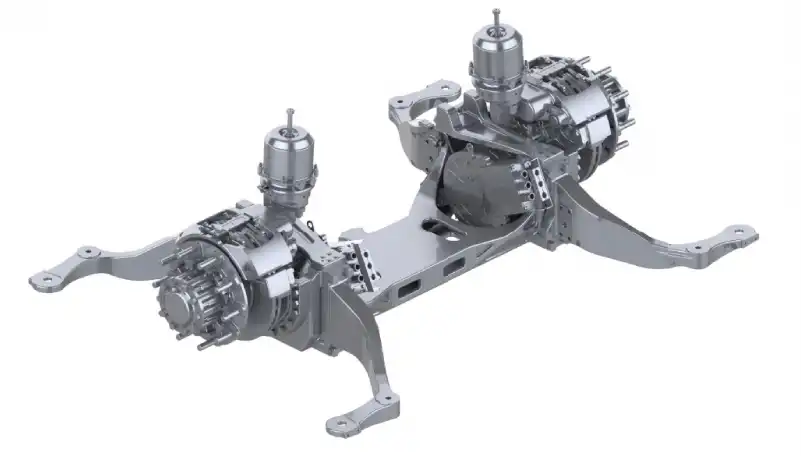
The electric drive axle is a highly integrated e-powertrain solution in which the electric motors are integrated directly into the axle assembly.
By removing conventional drivetrain components such as the drive shaft and gearbox, the system simplifies the mechanical layout and improves overall drivetrain efficiency.
For public transport applications, the compact packaging of the e-axle supports low-floor and fully flat vehicle architectures, helping to optimize interior space utilization while contributing to improved ride comfort and accessibility.
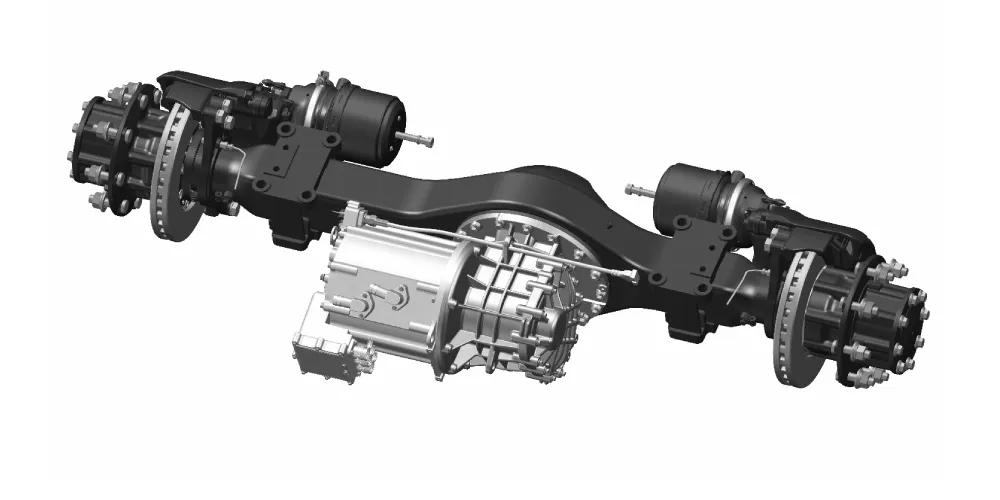
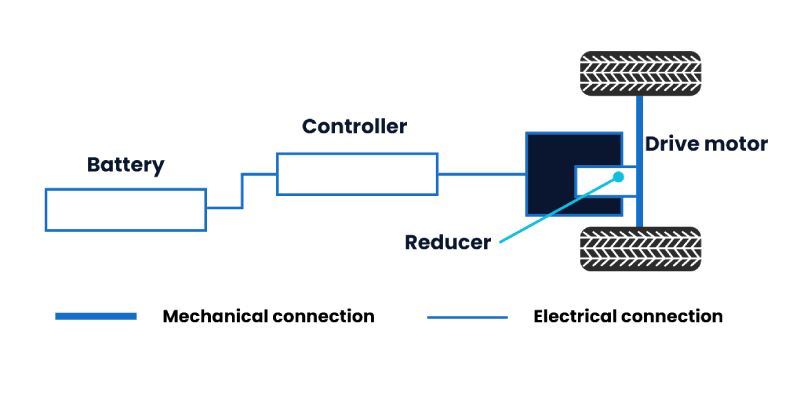
Parallel-Axis eAxle Solution
Parallel-Axis eAxle Solution
Key Characteristics
Compact Design
The motor, gearbox, and axle utilize a highly integrated parallel-axis design, resulting in a lightweight system with high transmission efficiency.
Improved NVH Performance
The gearbox is engineered for all operating conditions, featuring in-house manufactured DIN 4-grade high-precision gears, ensuring low noise levels.
Flexible Vehicle Layout
By eliminating the driveshaft, the chassis provides additional space for battery placement, allowing for a more flexible vehicle layout.
Engineering Highlights
- High load-bearing capacity with reduced weight, minimizing the risk of oil leakage.
- Integrated gear housing design reduces oil leakage risks, while the smooth curved internal surface minimizes oil churn losses.
- High-precision two-stage helical cylindrical gear transmission with double-sided precision grinding for superior efficiency, lower noise, and extended lifespan.
- Reduced motor offset relative to the axle housing decreases the risk of oil leakage at the reducer joint.
Technical Specification
Parameter |
Specification Range |
|---|---|
Axle Load Rating
|
3,500 - 9,500 kg
|
Target Vehicle Segment
|
5-meter to 11-meter buses/coaches
|
E-Axle Architecture
|
Single-motor centralized drive e-axle
|
Motor Rated Power
|
60 - 200 kW
|
Motor Peak Power
|
115 - 320 kW
|
Maximum Wheel Output Torque
|
5,400 - 14,415 N.m
|
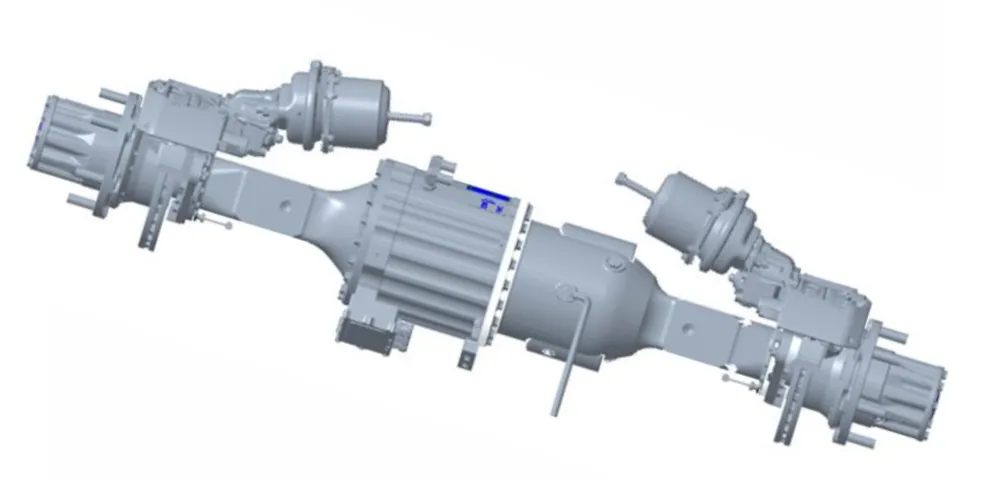
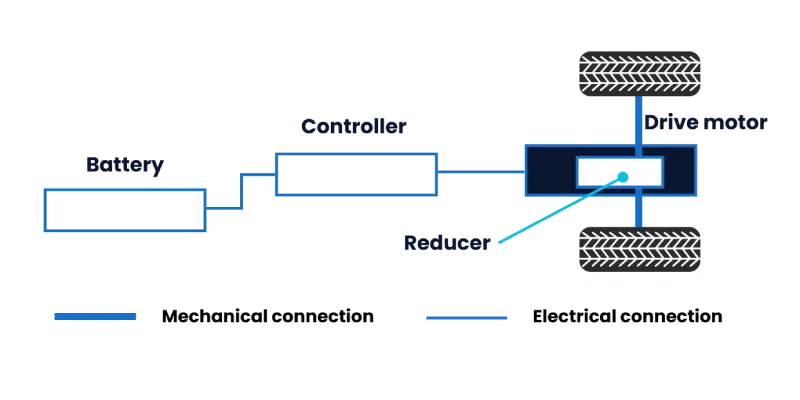
Co-Axial eAxle Solution
Co-Axial eAxle Solution
Key Characteristics
Compact Design
Both the electric motor and output shaft are aligned along the same axis, allowing for a more compact, stable, and efficient design, helping improve overall layout.
Improved NVH Performance
Superior NVH performance, with reduced center-of-gravity offset and less vibration thanks to the improved rotational stability.
Enhanced System Efficiency
Increased system efficiency due to the elimination of high-speed bearings and a more direct power transfer.
Engineering Highlights
- Industry-leading integration technology with the most compact chassis footprint and the lightest weight in its class.
- Symmetrical motor layout ensures balanced unsprung mass distribution, minimizing impact on suspension load conditions.
- High-precision helical gear transmission for reduced weight, high efficiency, low noise, and extended lifespan.
- High-strength cast axle housing with a smooth curved inner cavity to reduce oil churning losses.
Technical Specification
Parameter |
Specification Range |
|---|---|
Axle Load Rating
|
3,500 - 8,500 kg
|
Target Vehicle Segment
|
5-meter to 9-meter buses/coaches
|
E-Axle Architecture
|
Single-motor centralized drive e-axle
|
Motor Rated Power
|
60 - 80 kW
|
Motor Peak Power
|
130 - 160 kW
|
Maximum Output Torque
|
5,700 N.m - 13,000 N.m
|
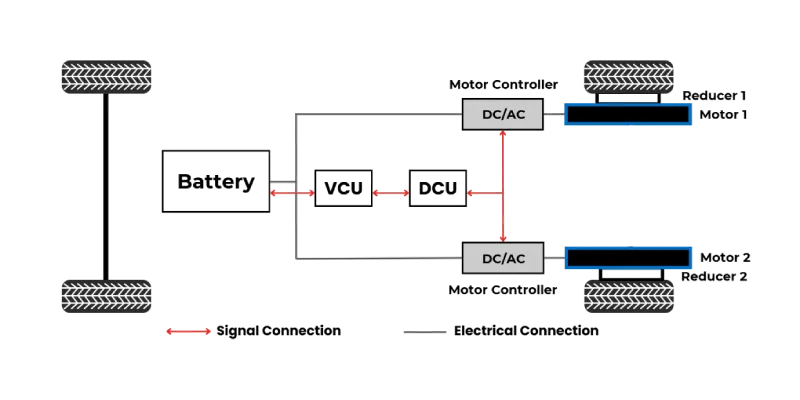
Distributed Drive eAxle Solution
Distributed Drive eAxle Solution
Key Characteristics
Short Transmission Chain
The distributed drive eAxle solution ensures each motor drives one wheel, significnatly shortening the transmission chain, minimizing transmission loss and maximizing efficiency..
Compact Structure
The distributed drive axle systems save space and contribute to a more compact vehicle structure. It's about 200 kg lighter than the central direct drive system.
Improved Tire Grip Distribution
The distributed eAxle enables individual adjustment of motor torque, optimizing the grip distribution, enhancing vehicle handling and driving stability, providing a safter and more controlled driving experience.
Enhanced Drive Efficiency
Aligning the motor's optimal efficiency range with the vehicle's operate at peak performance.
Engineering Highlights
- Integrating two electric motors with the axle for strong power and additional safety redundancy.
- Equipped with EDS, EASR, IESS, and other safety configurations to increase vehicle safety and stability in harsh environments.
- The integrated design of the electric bus axle lowers the gravity center of the battery system, increasing the stability of the whole vehicle.
- Distributed drive approach adds additional safety redundancy to the vehicle, offering a flexible power distribution strategy for different working conditions.
Technical Specification
Parameter |
Specification Range |
|---|---|
Axle Load Rating
|
9,000 - 13,000 kg
|
Target Vehicle Segment
|
8-meter to 18-meter buses/coaches
|
E-Axle Architecture
|
dual-motor distributed drive e-axle
|
Motor Peak Power
|
90*2 - 160*2 kW
|
Maximum Output Torque
|
6142*2 N.m - 10776*2 N.m
|

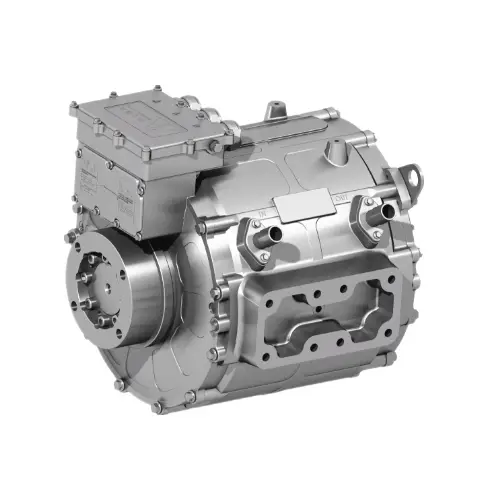
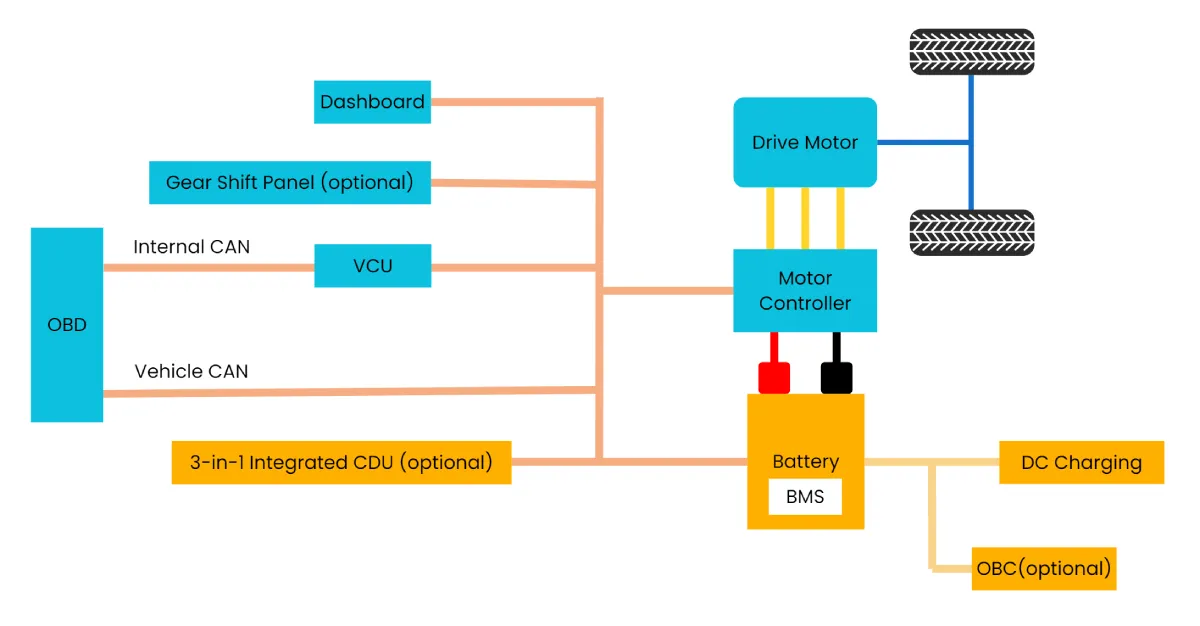
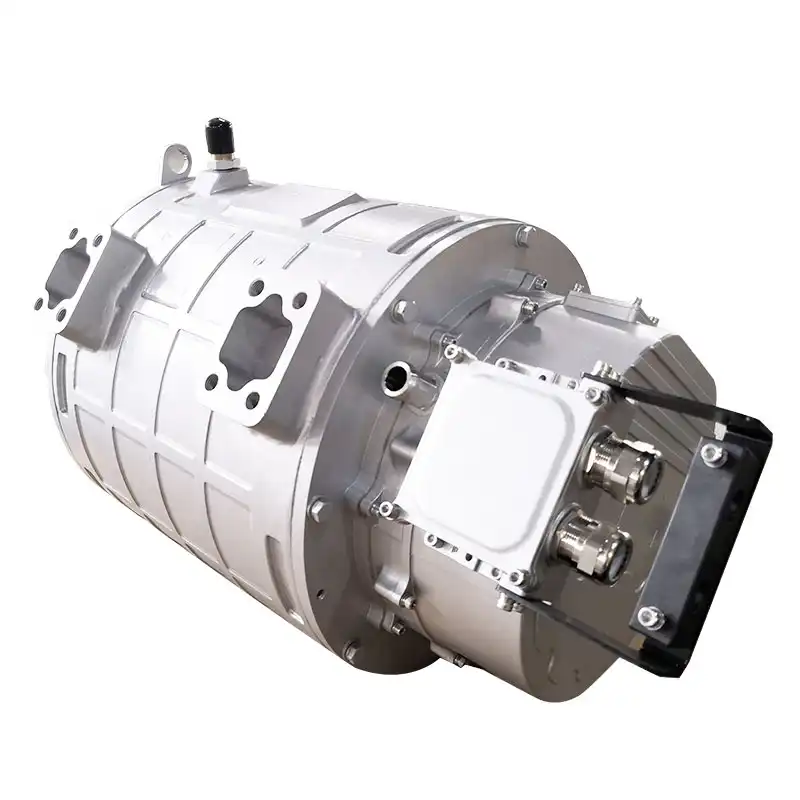
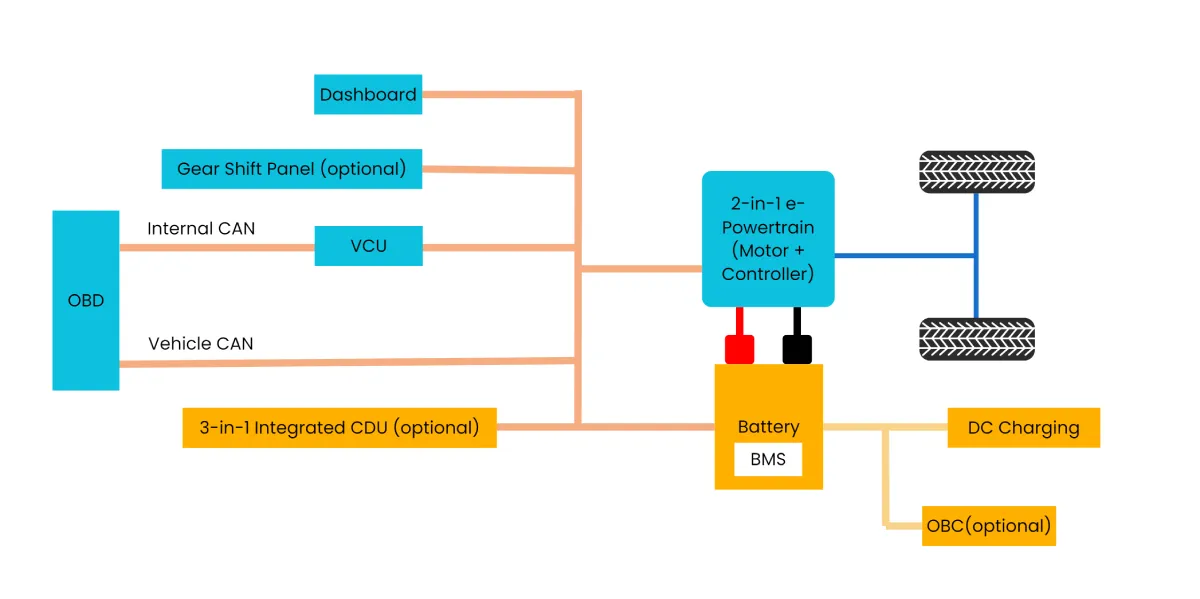
We provide central direct drive solutions for public transport vehicles, offering multiple configurations, including standalone electric motors and 2-in-1 e-powertrain systems integrating the motor with the controller. Designed for simplicity and reliability, these solutions are well-established and widely adopted across the industry. Achieving dual 90% efficiency benchmarks, our technology enhances green transportation and sustainability development, reinforcing our commitment to environmental stewardship.
Direct Drive Motor
Central Direct Drive Motor
Key Characteristics
High Efficiency
Achieve peak efficiency exceeding 97%. More than 90% of the system operates within an efficiency range of ≥85%, significantly enhancing energy utilization.
Noise Reduction
The no-load noise level across the full speed range ramains below 72 dB, providing a distinct competitive advantage in the industry.
Mature Applications
Our direct drive solutions have been widely deployed in electric buses worldwide, demonstrating proven reliability in real-world operations.
Engineering Highlights
- Utilizes advanced designs such as thin silicon steel laminations, high magnetic permeability materials, and sinusoidal air-gap flux density optimization.
- Features rotor segmented skewing and optimized auxiliary slot parameters at the rotor's outer edge, effectively reducing motor noise.
- Incorporates a dual-helical water channel design to enhance heat dissipation and stability while maintaining optimal water resistance and pressure differential.
- Equipped with a flange dustproof structure to prevent mud, sand, and wastewater from entering the motor, improving long-term reliability.
Technical Specification
Parameter |
Specification Range |
|---|---|
Target Vehicle Segment
|
6-meter to 18-meter buses/coaches
|
Drivetrain Architecture
|
Centralized direct-drive motor
|
Motor Rated Power
|
60 - 220 kW
|
Motor Peak Power
|
130 - 350 kW
|
Integrated Motor + Controller
Integrated Motor + Controller
Engineering Highlights
Compact Integrated Design
Optimized for minimal space usage, making vehicle integration more efficient.
Enhanced EMC Performance
Eliminates three-phase wiring harness radiation, reducing electromagnetic interference while improving overall system stability.
Lower Energy and Procurement Costs
Reduces power loss in wiring, improving efficiency and lowering component costs.
Proven Track Record
With over 30,000 units delivered, our e-powertrain for electric buses is trusted by industry leaders, providing its reliability and scalability in the market.
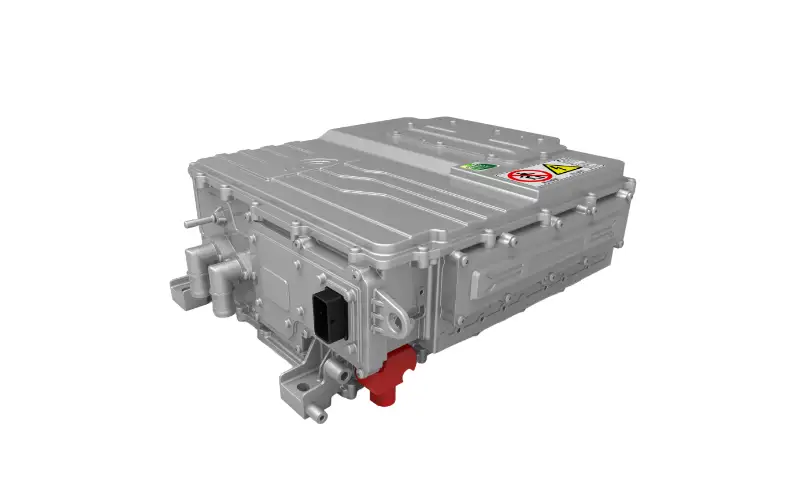
The Motor Control Unit (MCU) is supplied as a matched component with the electric motor or electric axle, ensuring validated compatibility, optimized performance, and simplified vehicle integration. Designed to support flexible powertrain architectures, the MCU helps reduce system complexity and streamline bus electrification projects.
Engineering Highlights
- Dual integration design: combines functional and physical integration to reduce size and weight while lowering manufacturing costs.
- High-efficiency dual inverter control: reduces energy losses and achieves a peak controller efficiency of 98.5%.
- Advanced filtering & shielding: features multi-stage filtering, optimized wiring layout, enhanced structural processing, and reinforced enclosure shielding for improved electromagnetic compatibility.
- Modular & scalable architecture: designed with a modular and platform-based approach, allowing greater flexibility and expandability.
- Digital simulation & optimization: utilizes digital modeling for simulation analysis, enabling more versatile and cost-effective component selection.
Traction Battery Solutions for Electric Buses
For public transport applications, we provide customized traction battery systems configured to match defined vehicle platforms, duty cycles, and operating conditions. The scope includes LFP traction battery packs, battery management systems (BMS), and thermal management systems (BTMS).
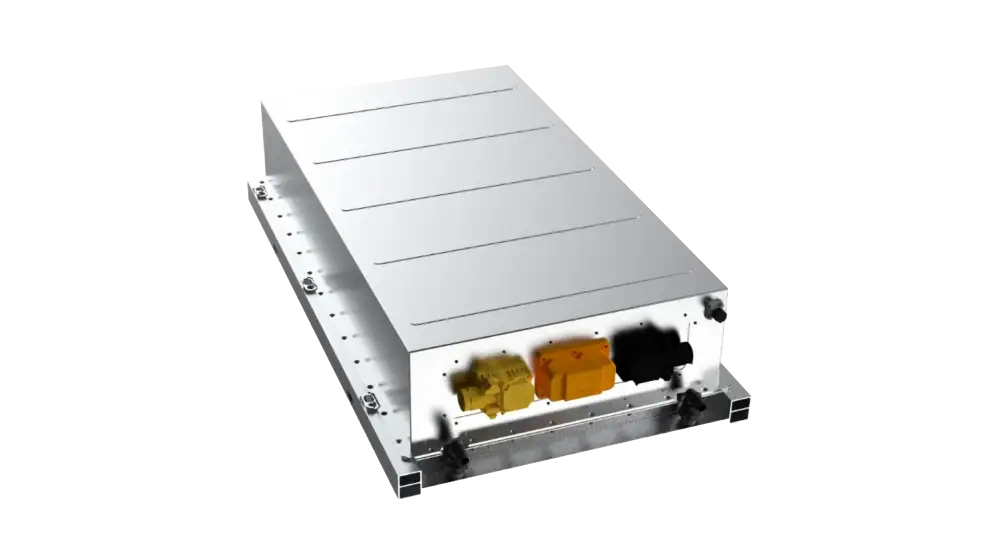
Our LFP traction battery packs are based on standardized, modular designs that have been validated across multiple commercial vehicle applications. The packs are manufactured using industry-qualified materials and established production processes to ensure consistency and repeatability.
Through a layer-by-layer optimization of cell, module, and pack-level structures, the system achieves competitive energy density at both the module and pack level, while maintaining robustness and suitability for public transport duty cycles.
Key Characteristics
High Safety & Reliability
Built on a high-safety LFP system, with battery cells sourced from top-tier manufacturers such as CATL, EVE, and Gotion. The robust pack design meets relevant safety standards.
Wide Capacity Options
Offer multiple battery capacity configurations to meet diverse market demands, including extended range and high-load applications.
Lightweight & High Energy Density
Optimized design achieves an energy density of ≥140 Wh/kg, enhancing vehicle efficiency.
Superior Temperature Adaptability
Can be equipped with liquid cooling or heating systems based on customer requirements, ensuring reliable performance in extreme heat or cold conditions.
Strong Mechanical Protection
Features IP67-rated protection, making it highly resistant to harsh environmental conditions.
Engineering Highlights
- Independently designed pack integration structure, adaptable to various battery cells and capacity requirements.
- Custom-designed electrical circuits and component selection, with in-house electrical testing capabilities to ensure compliance with industry standards.
- Highly integrated safety system, including harnesses, aluminum busbars, temperature sensors, internal pack pressure monitoring, explosion-proof valves, electrolyte leakage detection, and BMS collection boards, providing comprehensive and reliable active safety protection.
- Thermal runaway protection: equipped with insulation barriers between battery cells. If a cell reaches 900°C due to thermal runaway, the safety valve automatically releases pressure to prevent further hazards.
Technical Specifications
Parameter \ Pack |
1 |
2 |
3 |
4 |
5 |
|---|---|---|---|---|---|
Battery Cell
|
105 Ah
|
173 Ah
|
230 Ah
|
280 Ah
|
304 Ah
|
Grouping
|
2P48S
|
1P63S
|
1P48S
|
1P36S
|
1P36S
|
System Capacity
|
210 Ah
|
173 Ah
|
230 Ah
|
280 Ah
|
304 Ah
|
Rated System Voltage
|
153.6 V
|
202.86 V
|
153.6 V
|
115.2 V
|
115.2 V
|
System Energy
|
32.256 kWh
|
35.095 kWh
|
35.328 kWh
|
32.256 kWh
|
35.020 kWh
|
Dimension
|
1060*630*240 mm
| ||||
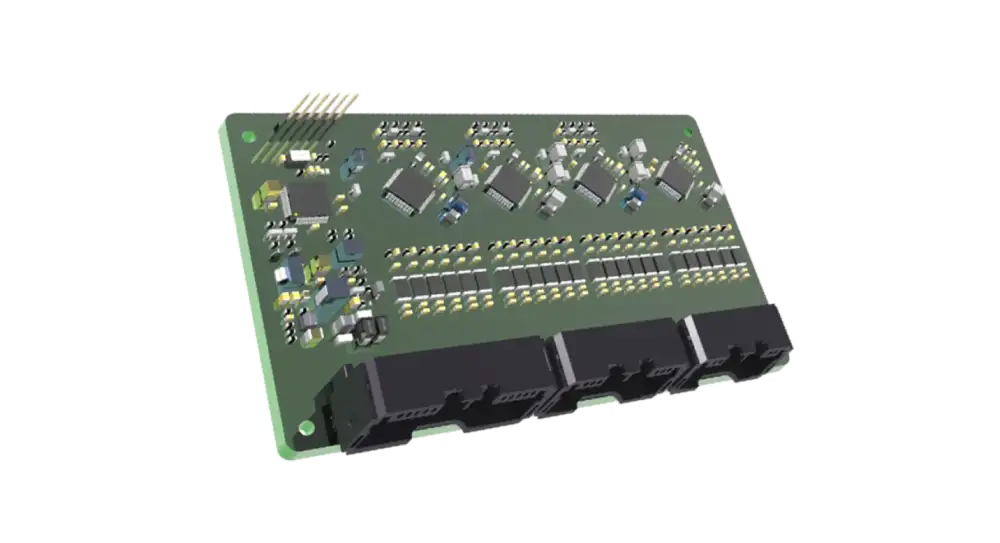
The Battery Management System (BMS) is a critical component designed to monitor and manage battery performance. Working alongside battery cells, the BMS acts as the system’s intelligent monitoring unit to ensure safety and efficient operation. Key functions of BMS include continuously tracking essential battery parameters, preventing overcharging and over-discharging, safeguarding the battery from potential damage; and optimizing performance and longevity by maintaining optimal operating conditions.
Our R&D Capabilities
- Independently develop BMS software for battery management control.
- Custom-designed control strategies and diagnostic analysis algorithms.
- Proprietary design of controller mainboards, control circuits, monitoring circuits, and communication circuits.
Engineering Highlights
- High-Precision Calculations: SOC accuracy ≤3%; SOH health assessment accuracy ≤5%.
- Three-Tier Architecture: Ensures precise battery cell management, reduces error margins, and enables full lifecycle battery management.
- High-Speed Daisy-Chain Communication: Faster data transmission, lower power consumption, enhanced stability, strong anti-interference capability, and high voltage resistance.
- High Integration: BMS and PDU integration increases battery energy density, saving approximately 30% of space and reducing weight by 10%.
- Comprehensive Smart BMS Platform: Covers the entire system, from BMS controller software to an integrated edge-side BMS+EMS system and an EMS/battery management cloud platform, ensuring full-process security and control.
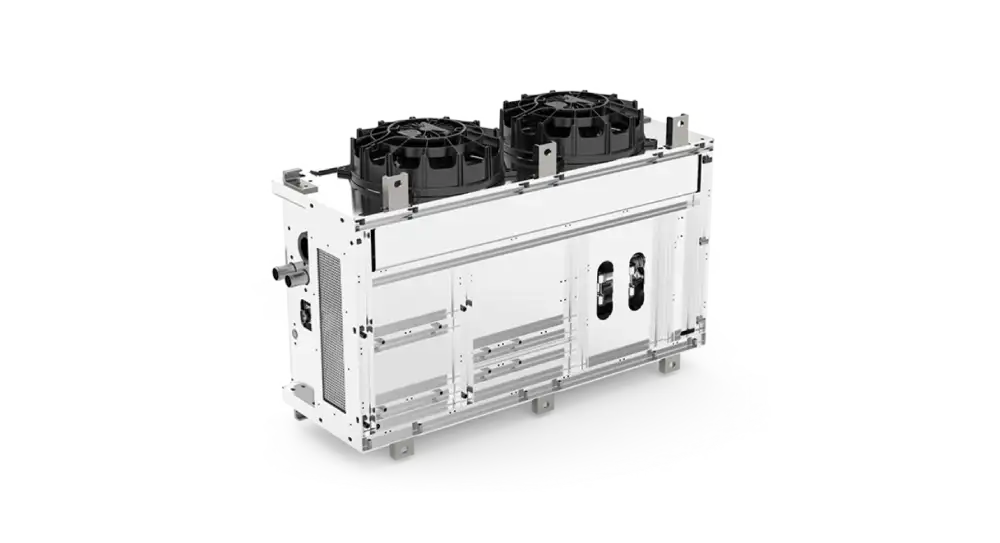
The Battery Thermal Management System (BTMS) is an integrated cooling and heating system designed to regulate the temperature of onboard batteries. The primary goal of BTMS is to keep the battery pack within an optimal temperature range, ensuring peak performance and longevity. By managing thermal energy across the vehicle, the system effectively reduces waste heat emissions, enhances energy efficiency, and minimizes environmental impact.
Solution Features
- Accurately measures and tracks battery temperature in real time.
- Effectively dissipates heat when battery temperature is high, preventing thermal runaway.
- Warms the battery in low temperatures to ensure safe and efficient charging and discharging.
- Reduces temperature differences within the battery pack, preventing localized overheating and extending overall battery lifespan.
Engineering Highlights
- Aluminum alloy frame reduces weight and improves efficiency.
- Optional PTC liquid heater with standby, cooling, heating, and self-circulating modes.
- CAN bus communication for real-time fault self-diagnosis and status updates.
- Optional add-ons: tube-fin condenser, DC-DC, expansion tank.
EV Charging Solutions for Bus Operations
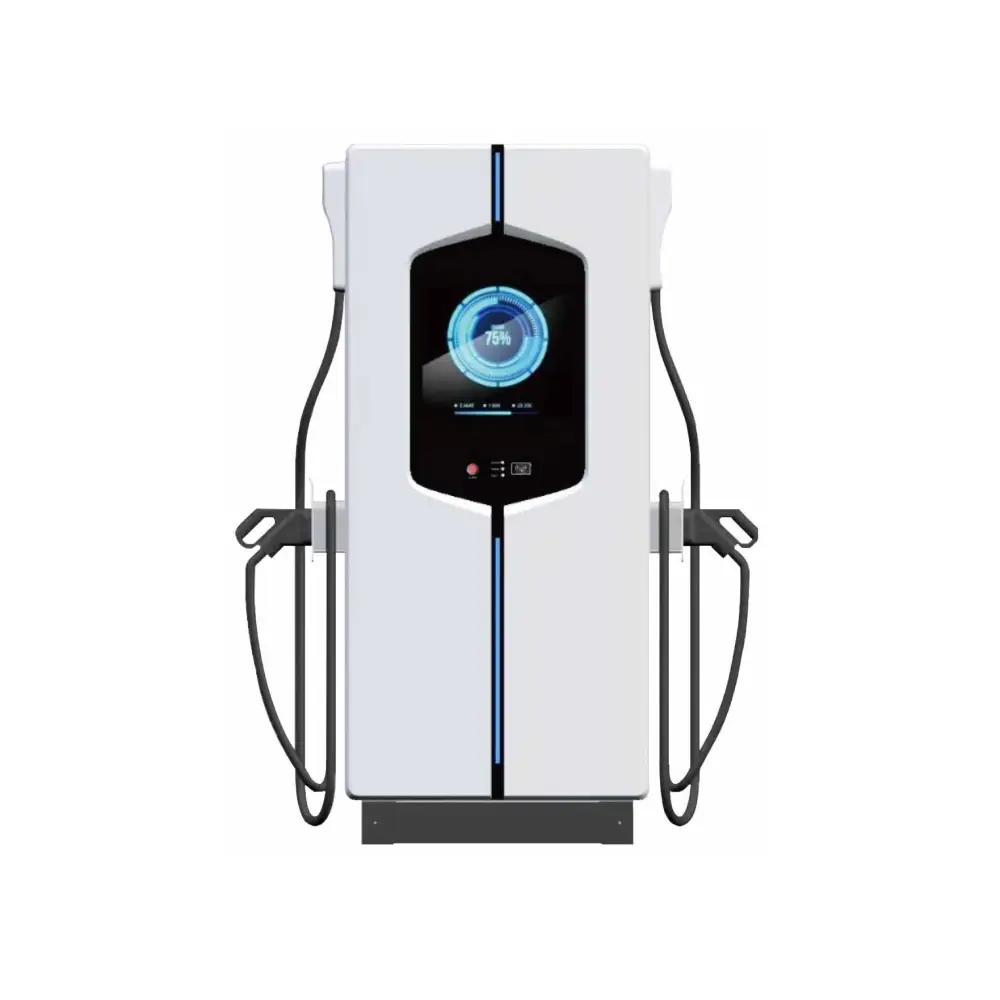
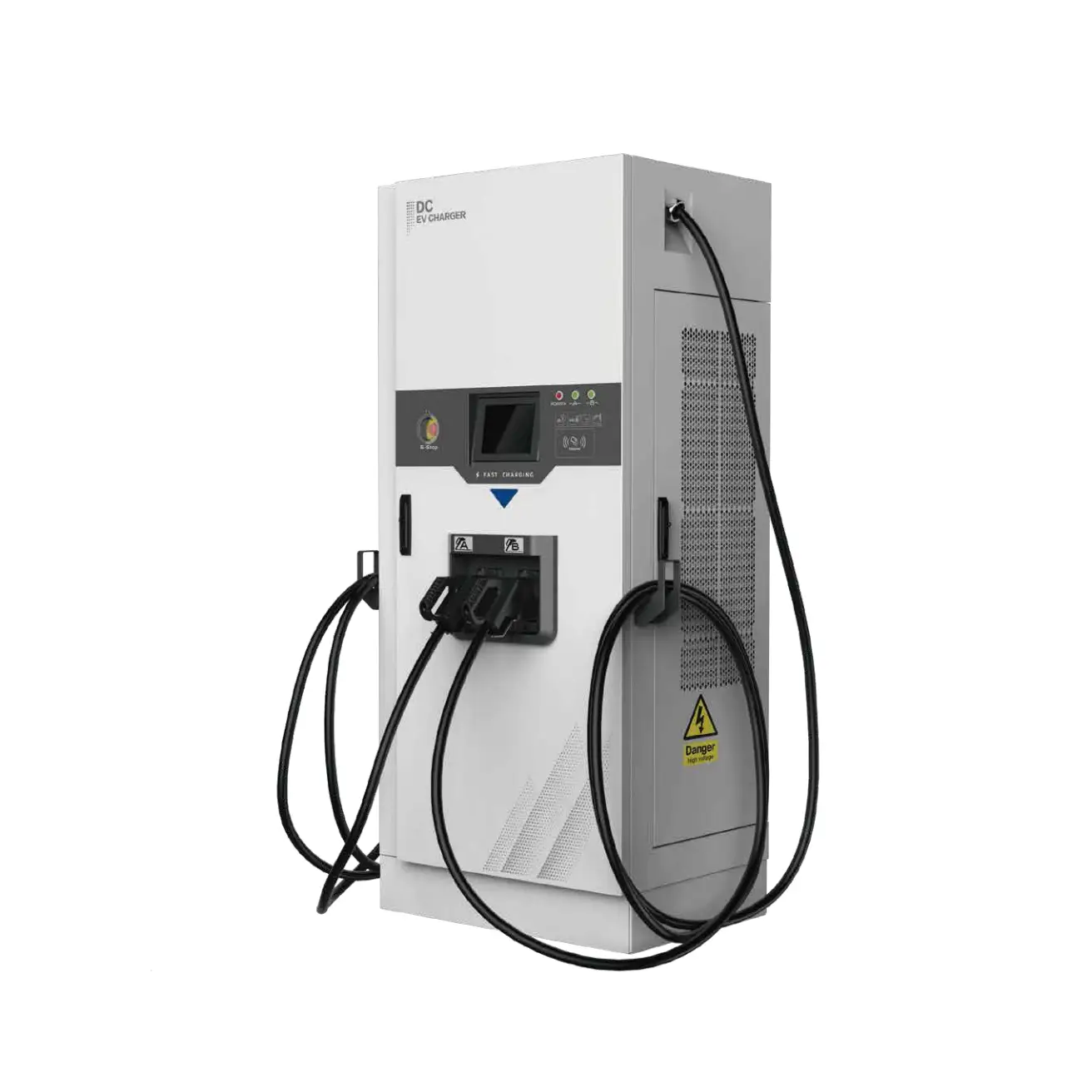
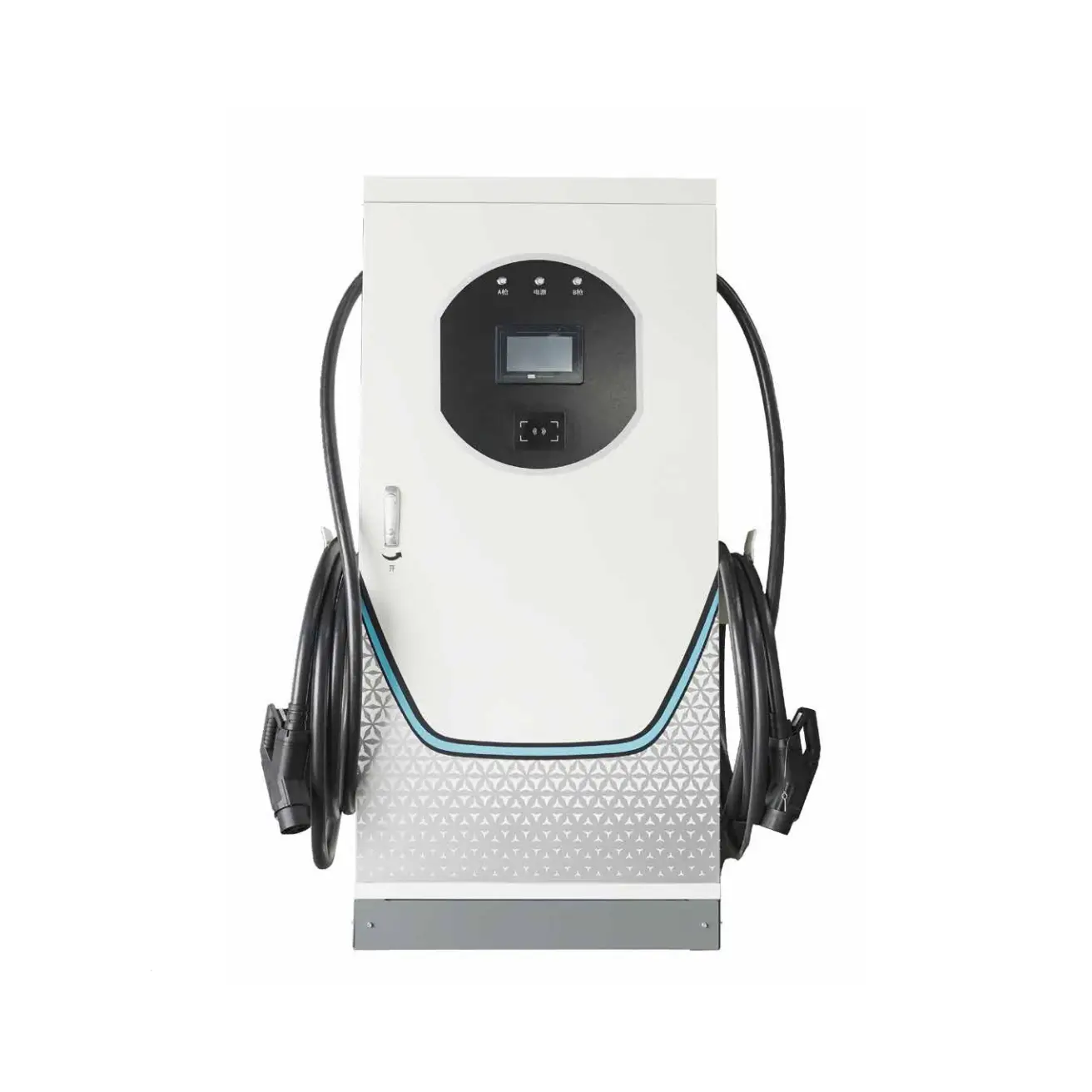
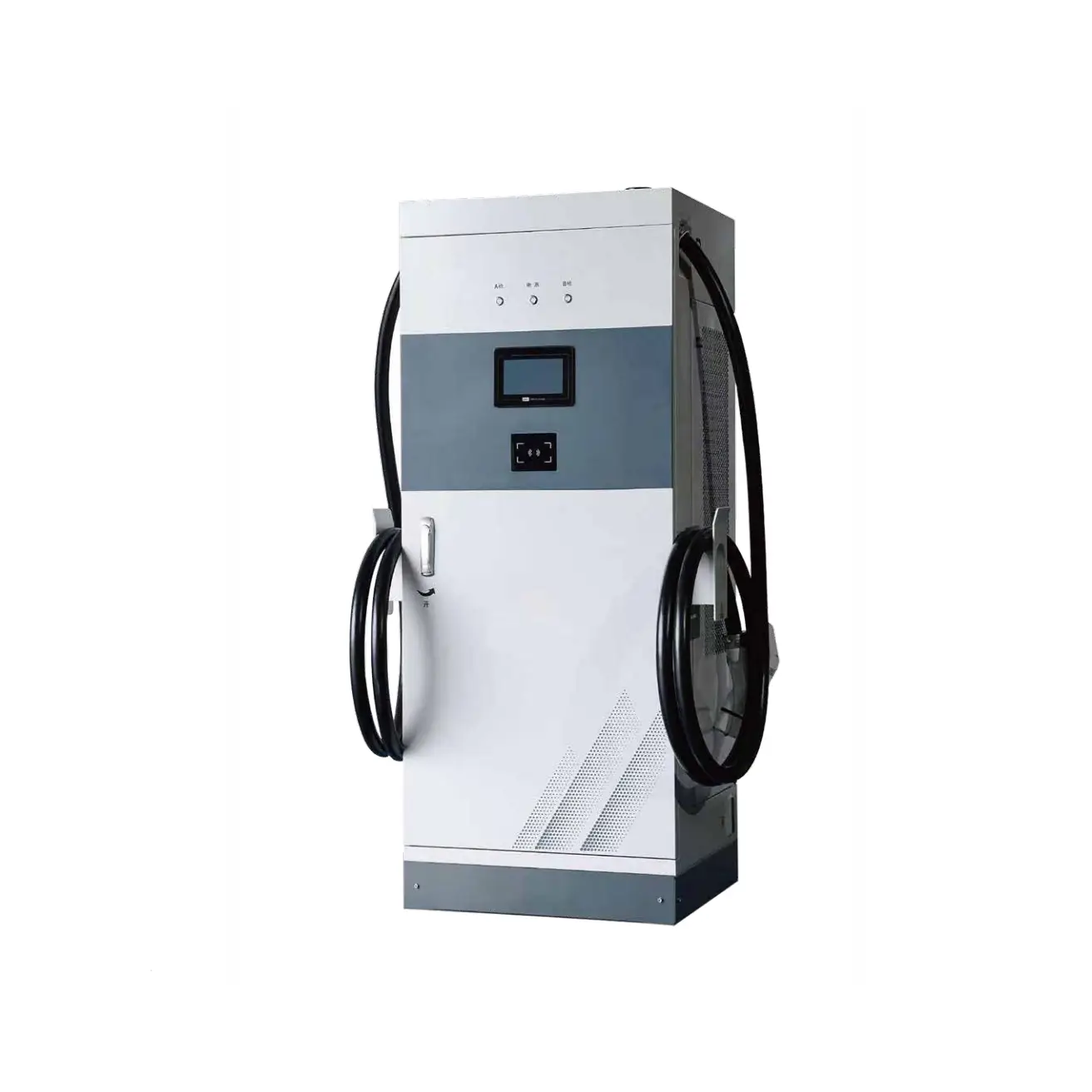
Designed for electric city buses, coaches, shuttle buses, and other commuter vehicles operating on fixed routes, these charging solutions support centralized depot-based charging architectures. The systems are suited for locations requiring high-power, multi-vehicle charging infrastructure, enabling coordinated fleet charging. Typical operating modes include overnight bulk charging to maximize vehicle availability, supplemented by daytime fast charging where required to support intensive duty cycles and operational flexibility.
Other EV Systems for Public Transport Vehicles
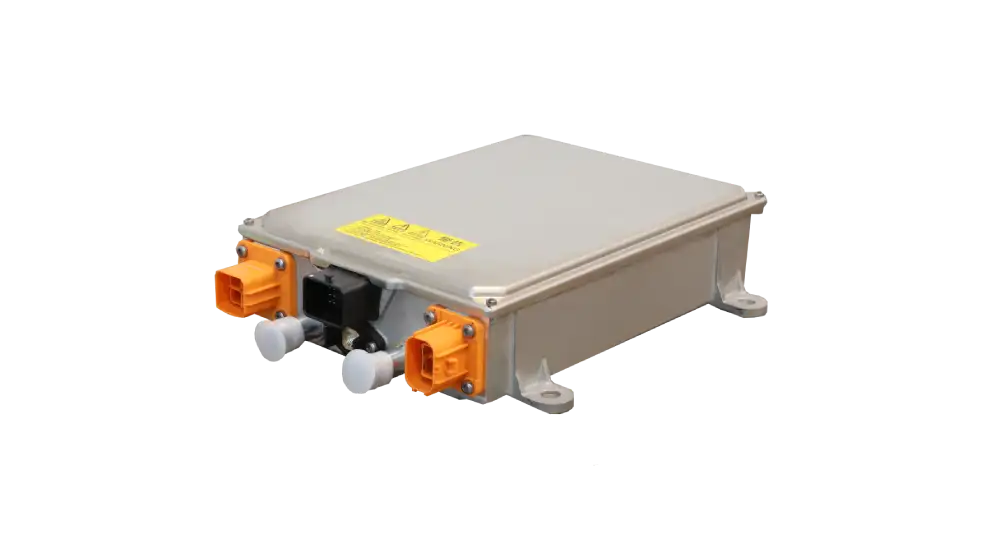
Onboard Charger, DC-DC Converter, PDU
Experience peak performance and reliability with our integrated EV on board charger (OBC), DC/DC converter, and PDU combo tailored for electric vehicles. Engineered for top-tier power conversion efficiency and remarkable power density, our chargers cover a broad power spectrum, ranging from 3.3 kW to 40 kW.
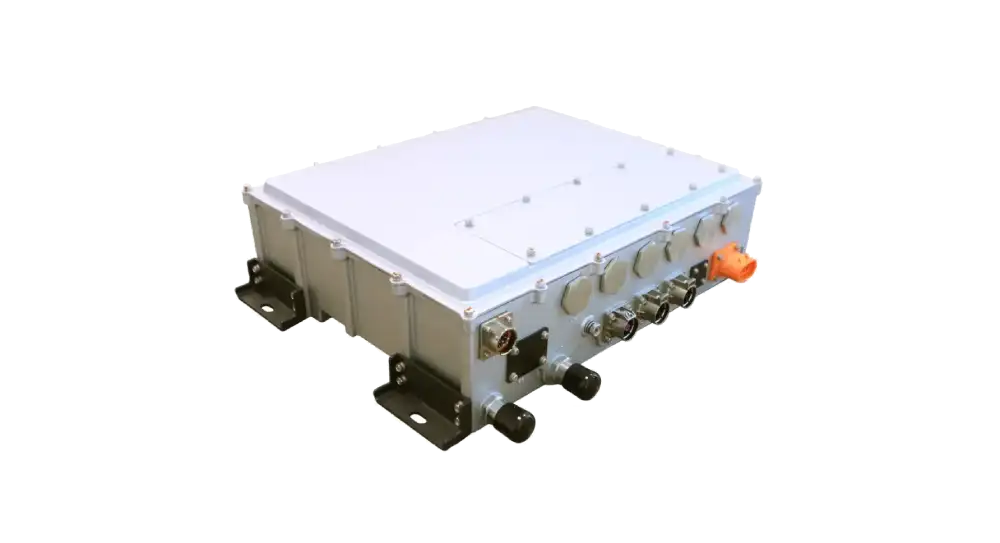
Auxiliary Inverter
We provide modular and scalable X-in-1 auxiliary inverters for public transport vehicle applications. Our auxiliary inverters cater to various types of new energy vehicles, including hybrid electric vehicles (HEV), battery electric vehicles (BEVs), and hydrogen fuel cell electric vehicles (FCEVs).
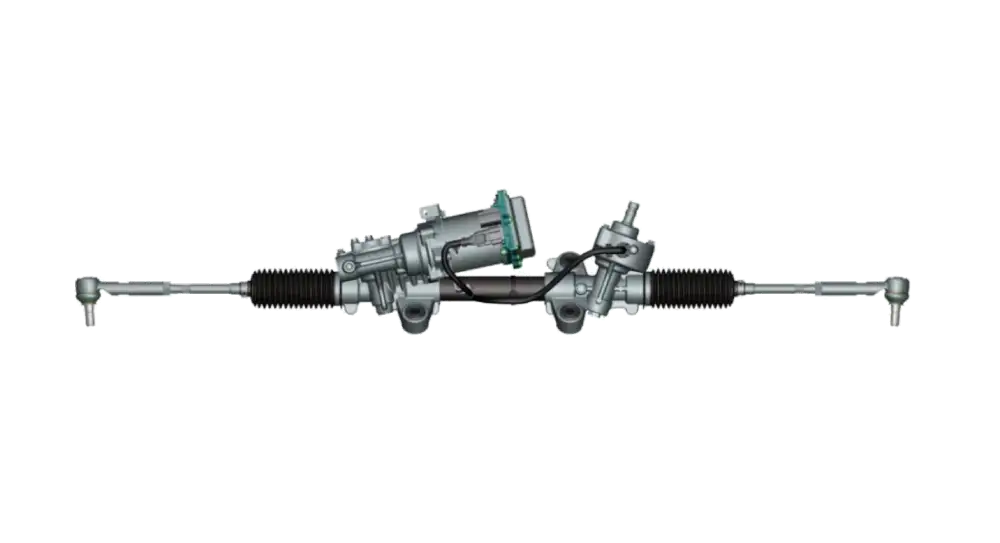
Electric Power Steering (EPS)
The Electric Power Steering System (EPS) is a type of power steering solution that uses an electric motor to assist the driver in steering. We offer various EPS systems based on the positioning of the assist motor, including C-EPS, P-EPS, DP-EPS, and R-EPS, each designed to meet the specific needs of different vehicle types.
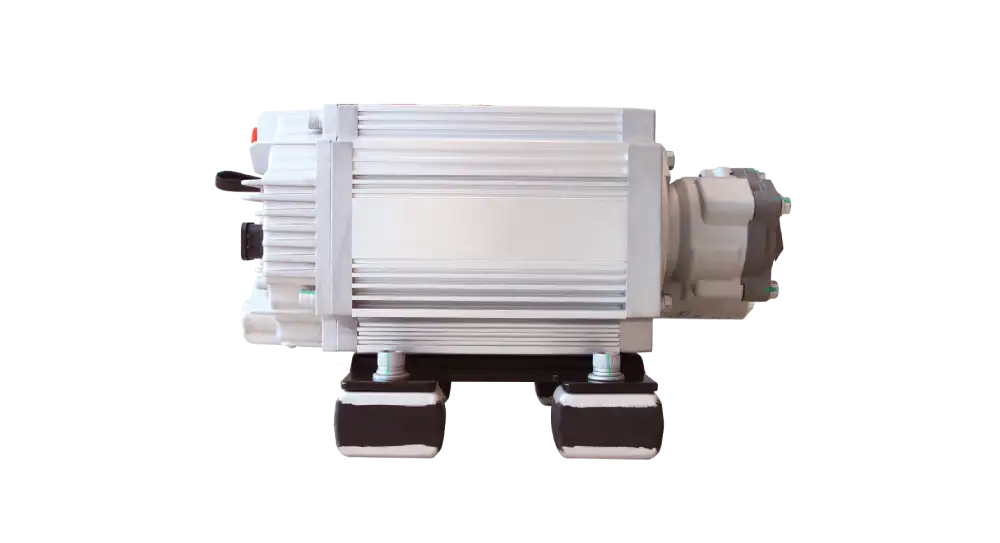
Electro-Hydraulic Power Steering (EHPS)
The Electro-Hydraulic Power Steering (EHPS) system is an upgraded version of the traditional hydraulic power steering (HPS) system. In this system, the steering pump is no longer driven directly by the engine but by an electric motor, coupled with an electronic control unit. This allows the steering assist to be adjusted not only based on the steering angle but also in response to the vehicle’s speed, providing a more efficient and responsive steering experience.
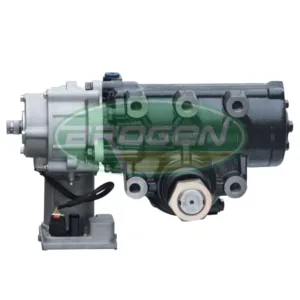
Electro-Hydraulic Recirculating Ball Steering (EH-RCB)
We provide electro-hydraulic power recirculating ball steering systems designed for heavy commercial vehicles, including large buses and medium-to-heavy trucks. Based on conventional hydraulic power steering (HPS) architecture, the electro-hydraulic power recirculating ball steering system integrates electronic control units (ECU) and actuators – most importantly, a servo motor to enhance steering performance.
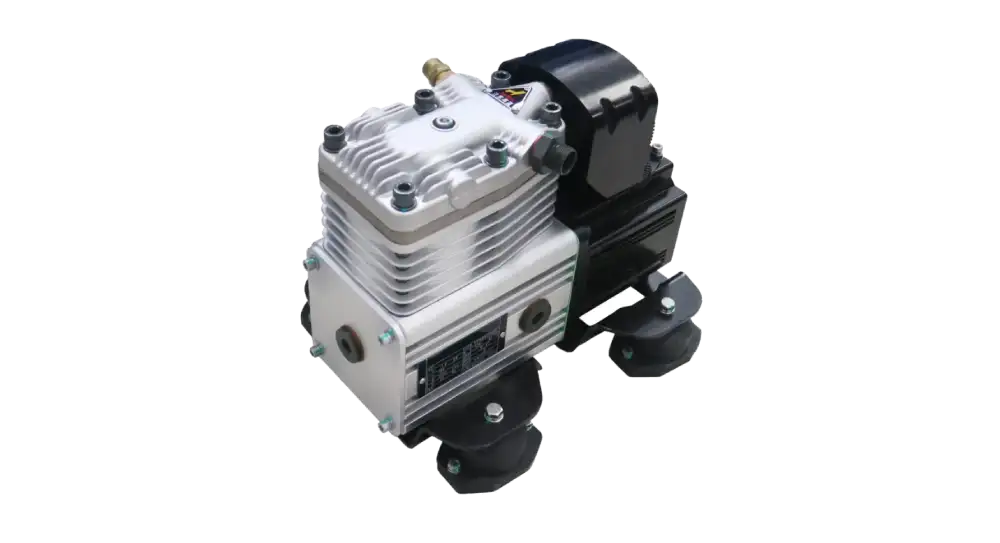
Air Brake Compressor
Our two-stage oil-free electric air brake compressors ensure the delivery of oil and water-free air, eliminating concerns associated with oil emulsification, leaks, and fire hazards. Its innovative structural design minimizes energy wastage during the compression process, thereby optimizing overall efficiency.
Navigating Our Process

Demand Analysis & Project Evaluation
Once we receive your inquiry, our experts will connect with you within two business days to understand your specific requirements for the EV solution and conduct an initial feasibility evaluation of your project.
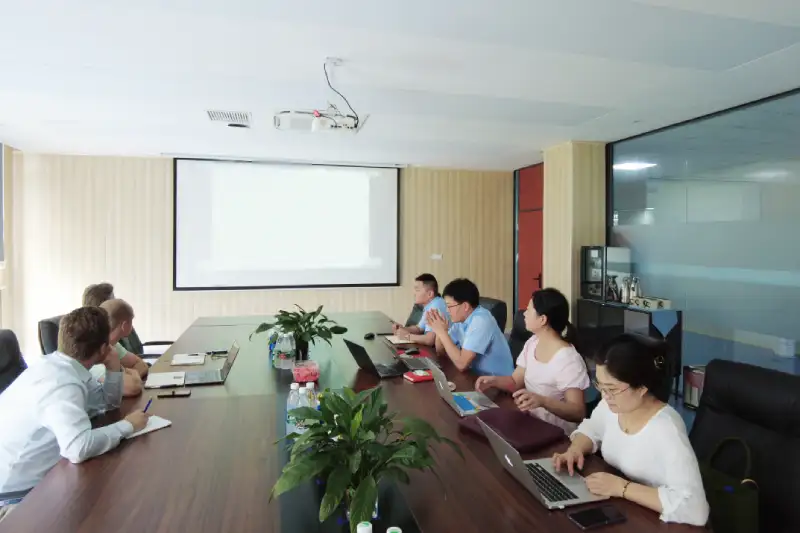
Project & Technical Coordination
If the project is deemed feasible, our engineering team will collaborate closely with your team on both hardware and software aspects to develop a viable solution. We will also provide a detailed quotation based on the technical requirements.
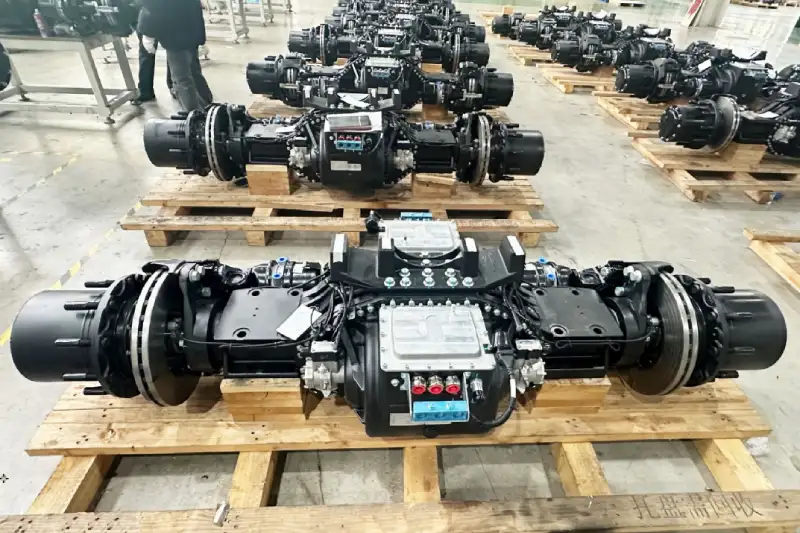
Development, Manufacturing & Testing
For customized or modified systems, we proceed with product development, including hardware and software adaptations. Our EV systems undergo rigorous testing to ensure quality, reliability, and full functionality before deployment.
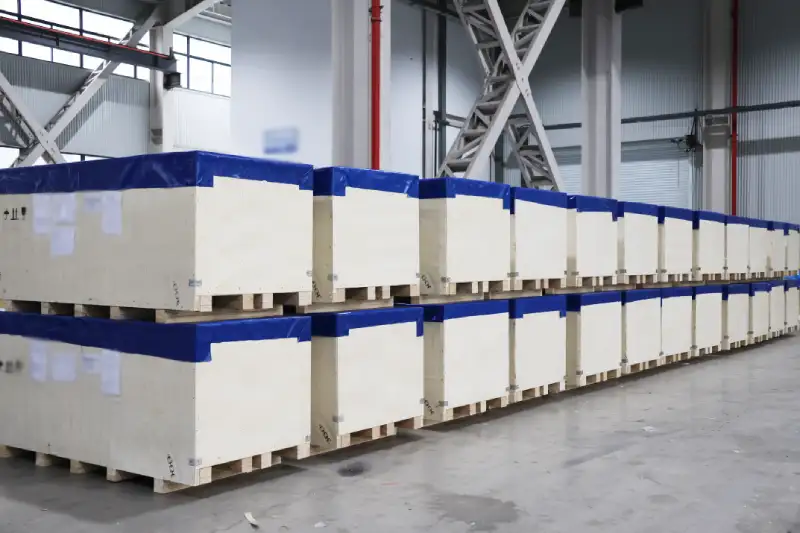
In-Time Global Shipping & Delivery
We have established strong partnerships with international shipping providers, ensuring safe and timely delivery of products to your specified location. This guarantees a smooth and efficient deployment of your EV project.
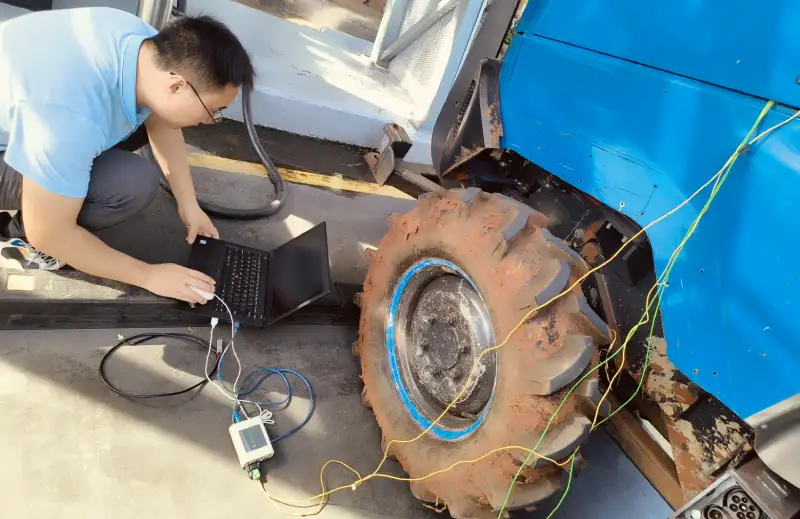
Full-Stage Remote/Onsite Technical Support
We provide technical support throughout the entire project lifecycle, including consultancy, hardware and software development, calibration, and both onsite and remote debugging, ensuring optimal performance and long-term success.
Case Studies
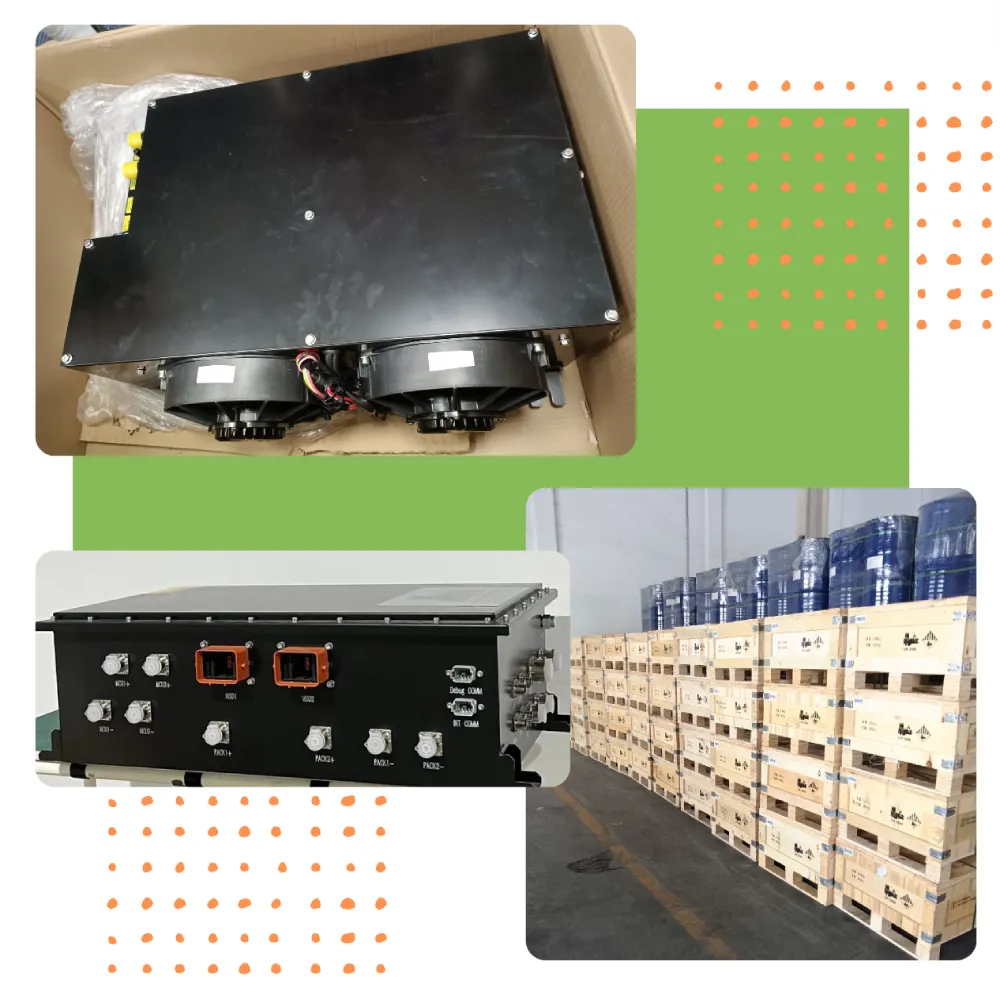
Electric Bus Project
In response to Turkey’s growing environmental initiatives, a well-established Turkish commercial vehicle manufacturer embarked on an electric bus project, focusing on 8-meter and 12-meter models. Leveraging our expertise in electric bus battery systems, we delivered a tailored solution that included a 280 kWh battery system, a custom BMS with PDU, a cooling unit, and other essential components. This case study outlines our approach to overcoming technical challenges and providing comprehensive support throughout the project
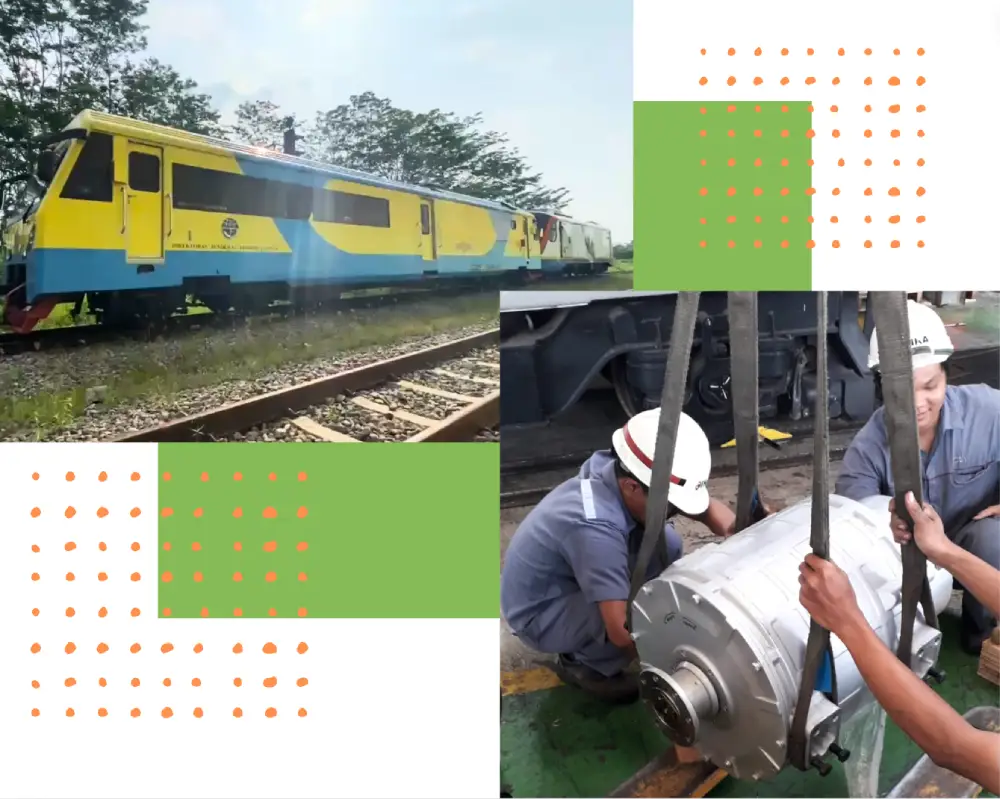
Electric Train Project
This project is about the electric train. In this project, we have supplied the PMSM electric motors. In the photo, technicians are seen installing these motors, which are designated for traction in the first carriage and propulsion in the last carriage. A successful test drive has been completed, confirming that the system operates smoothly on the train. The electric motor has a rated power of 120 kW and a peak power of 200 kW. It adopts the integrated design, saving space and improve the vehicle layout.
FAQ – Project Scope & Collaboration Requirements
Our solutions are designed for structured commercial bus projects, including new electric bus platform development and diesel-to-electric conversion projects. Projects should be based on a clearly defined vehicle platform, duty cycle, and operating environment.
The systems are applicable to city buses, highway coaches, articulated buses, trolley buses, and shuttle buses, typically ranging from 6 meters to 18 meters in length. Platform suitability is assessed based on vehicle layout, axle loads, and operational requirements.
The solution scope typically includes electric powertrain systems, traction battery systems (including BMS and thermal management), power electronics such as inverters and converters, auxiliary electric systems (e.g., steering and braking drives), and charging system interfaces.
No. We do not supply complete vehicles or provide turnkey conversion services. Our role is to supply electrification systems and subsystems. Final vehicle integration, calibration, validation, homologation, and in-service operation remain the responsibility of the OEM or designated engineering service companies.
Projects are intended for OEMs, bus manufacturers, and professional engineering teams with in-house or partner-level vehicle-integration capabilities. This includes responsibility for system integration, control strategy implementation, calibration, and vehicle-level validation.
To ensure EV systems are properly configured, customers are recommended to provide detailed project inputs, including vehicle platform details, duty cycle, route profile, passenger load, charging strategy, ambient operating conditions, and regulatory requirements. Early alignment on these parameters enables accurate system selection and long-term operational reliability.
We provide system-level software and interface support related to the supplied subsystems. Vehicle-level control strategies, VCU development, and overall system coordination are expected to be handled by the OEM or partnered engineering service companies.
Traction battery systems are configured based on the vehicle platform, duty cycle, charging method, and thermal conditions. The scope includes battery packs, BMS, PDU, and thermal management systems designed to support high-cycle operation typical of public transport service.
Yes. Our EV systems have been deployed in multiple domestic and international public transport projects and have been validated under real-world duty cycles, supporting stable performance, reliability, and long-term commercial operation.
System configurations and interfaces can be adapted to meet regional technical standards and project-specific requirements. Compliance, certification, and homologation at the vehicle level remain the responsibility of the OEM or integrator.
Contact Us
Get in touch with us by sending us an email, using the Whatsapp number below, or filling in the form below. We usually reply within 2 business days.
Email: contact@brogenevsolution.com
Respond within 1 business day
Whatsapp: +8619352173376
Business hours: 9 am to 6 pm, GMT+8, Mon. to Fri.
LinkedIn channel
Follow us for regular updates >
YouTube channel
Ev systems introduction & industry insights >